Learn More About Concrete Placing Booms
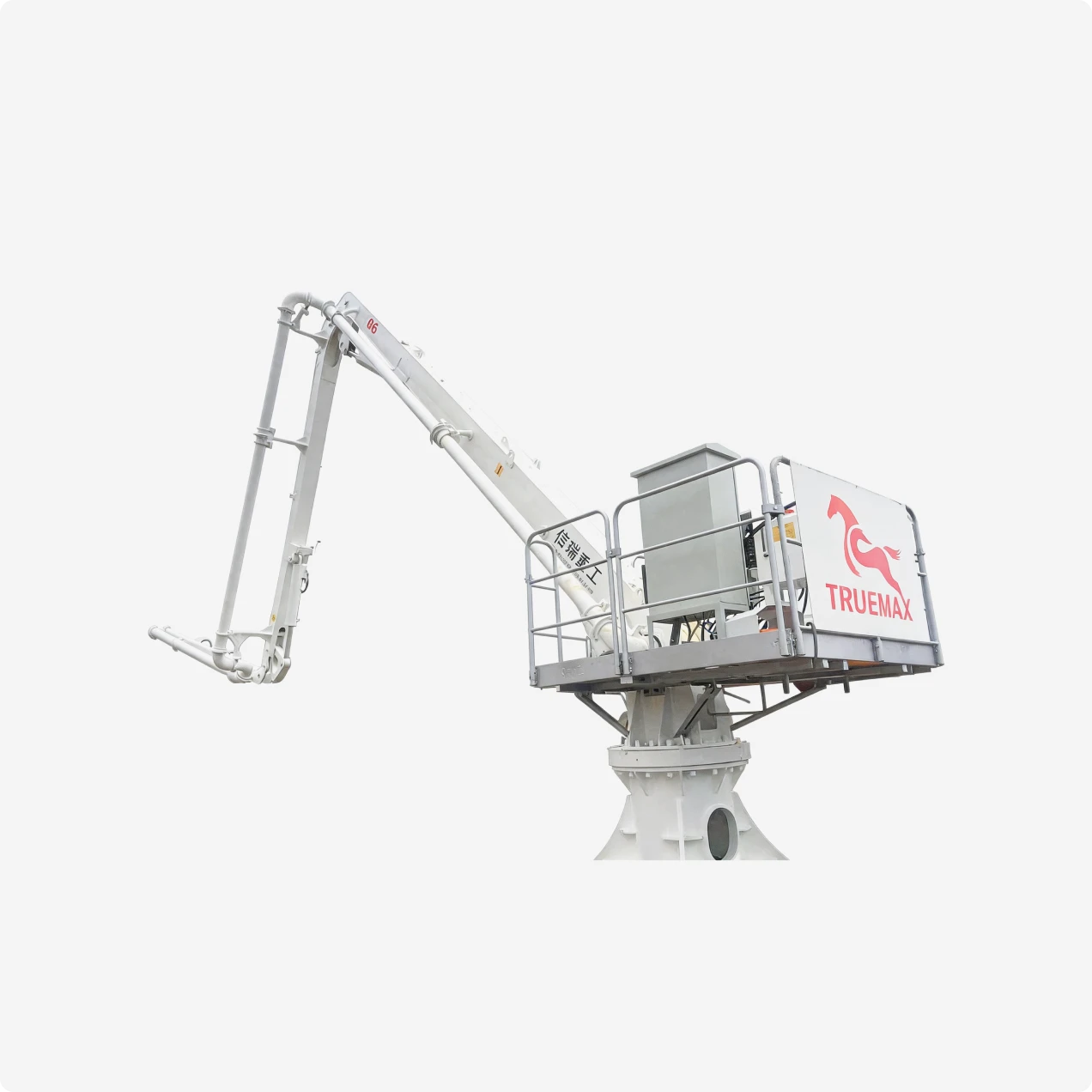
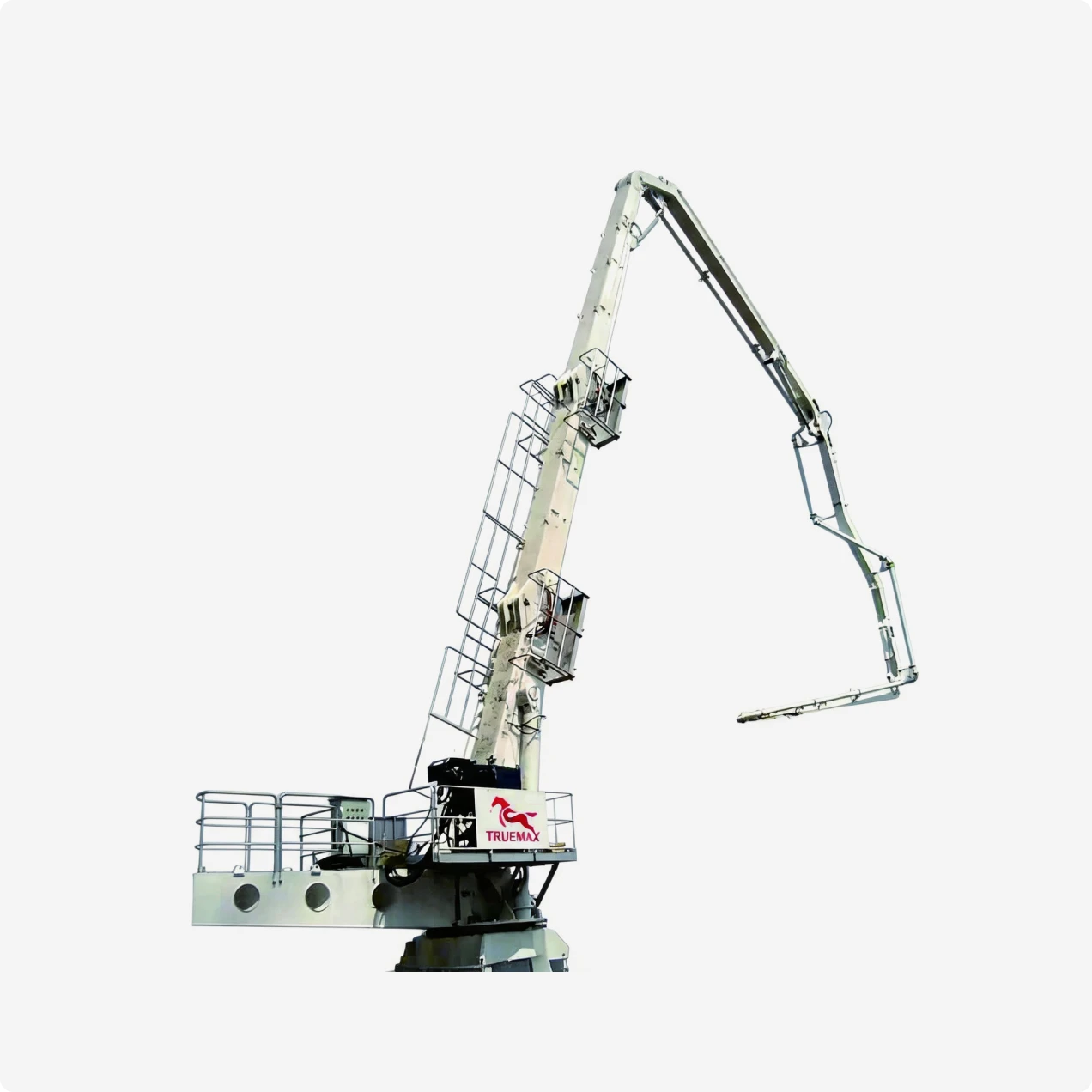
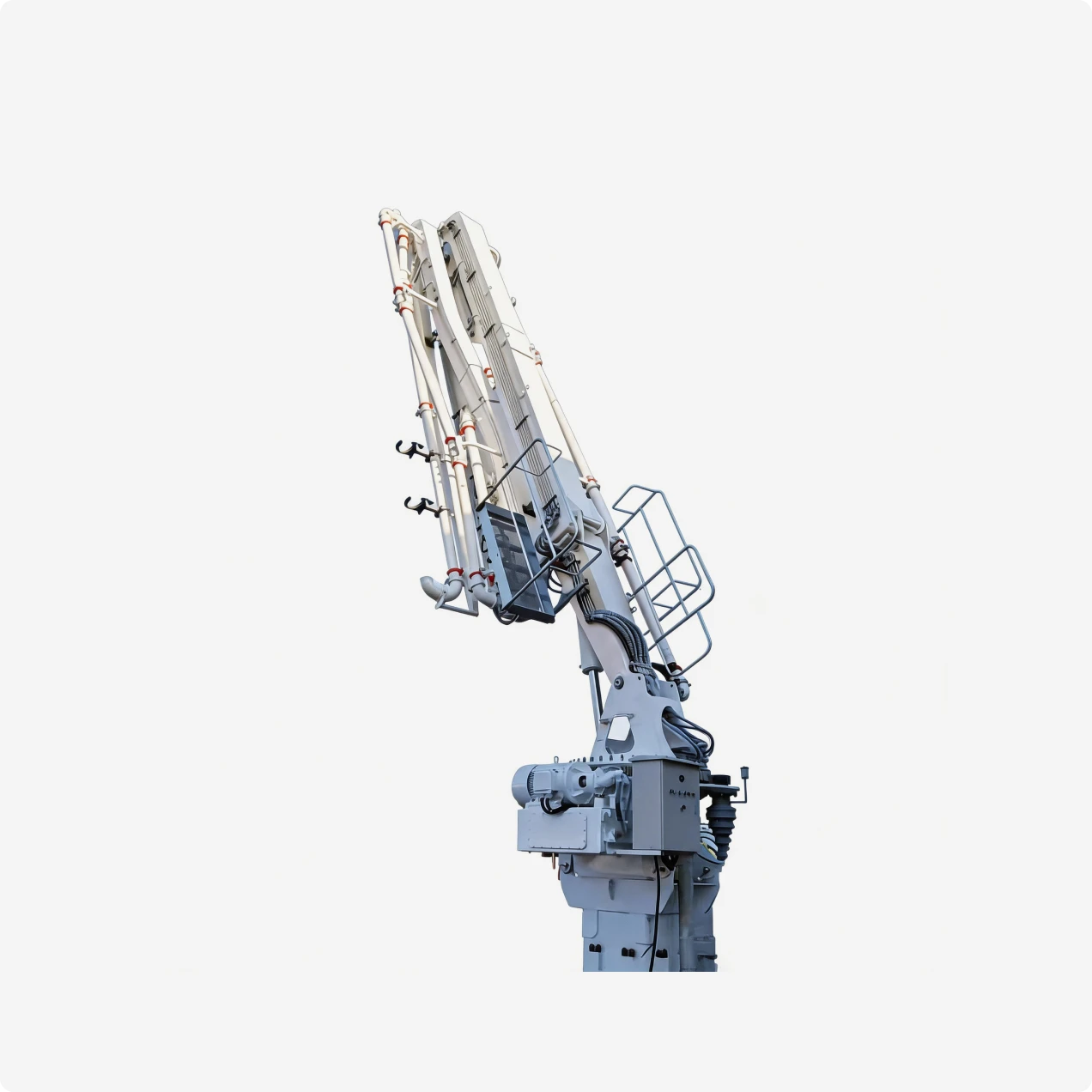
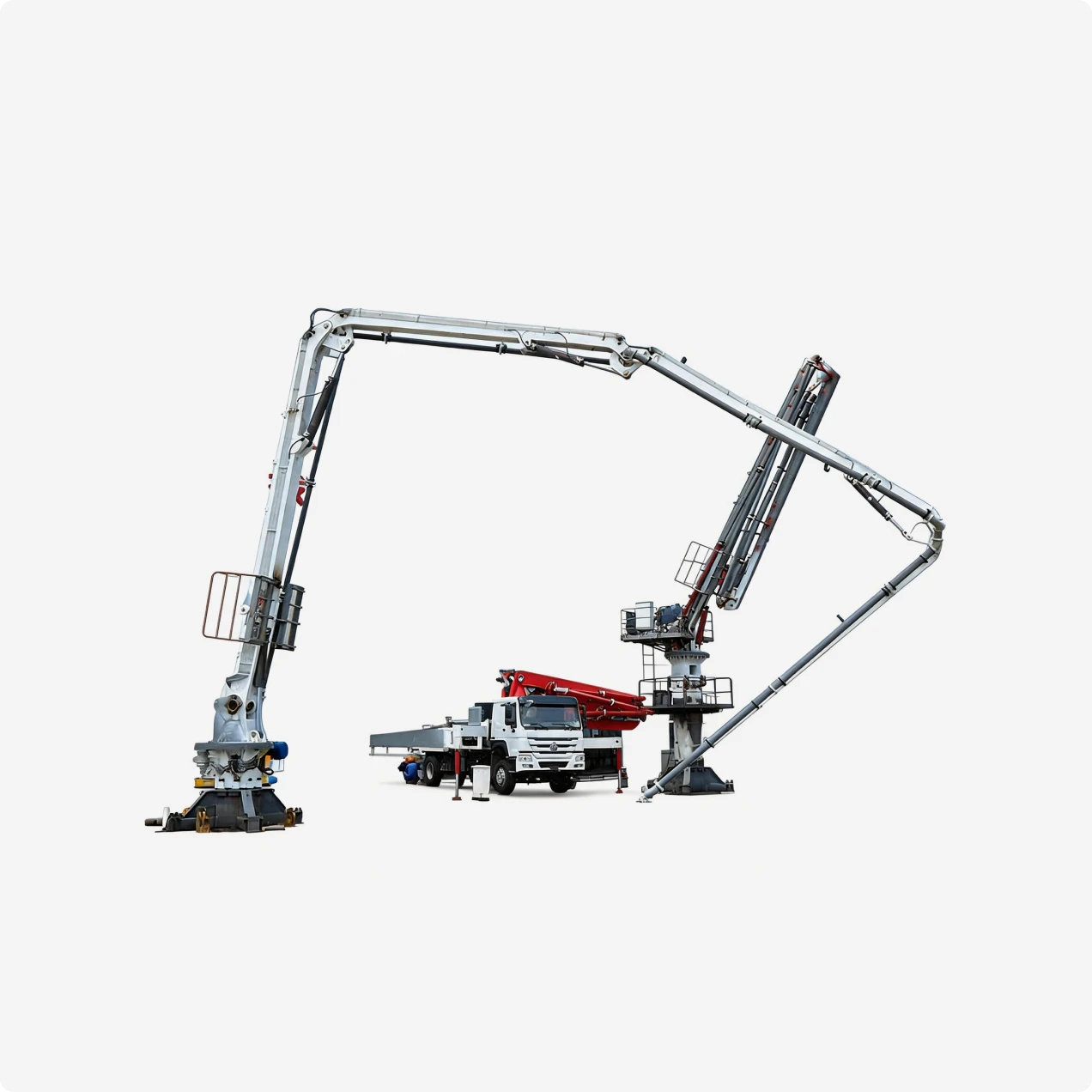
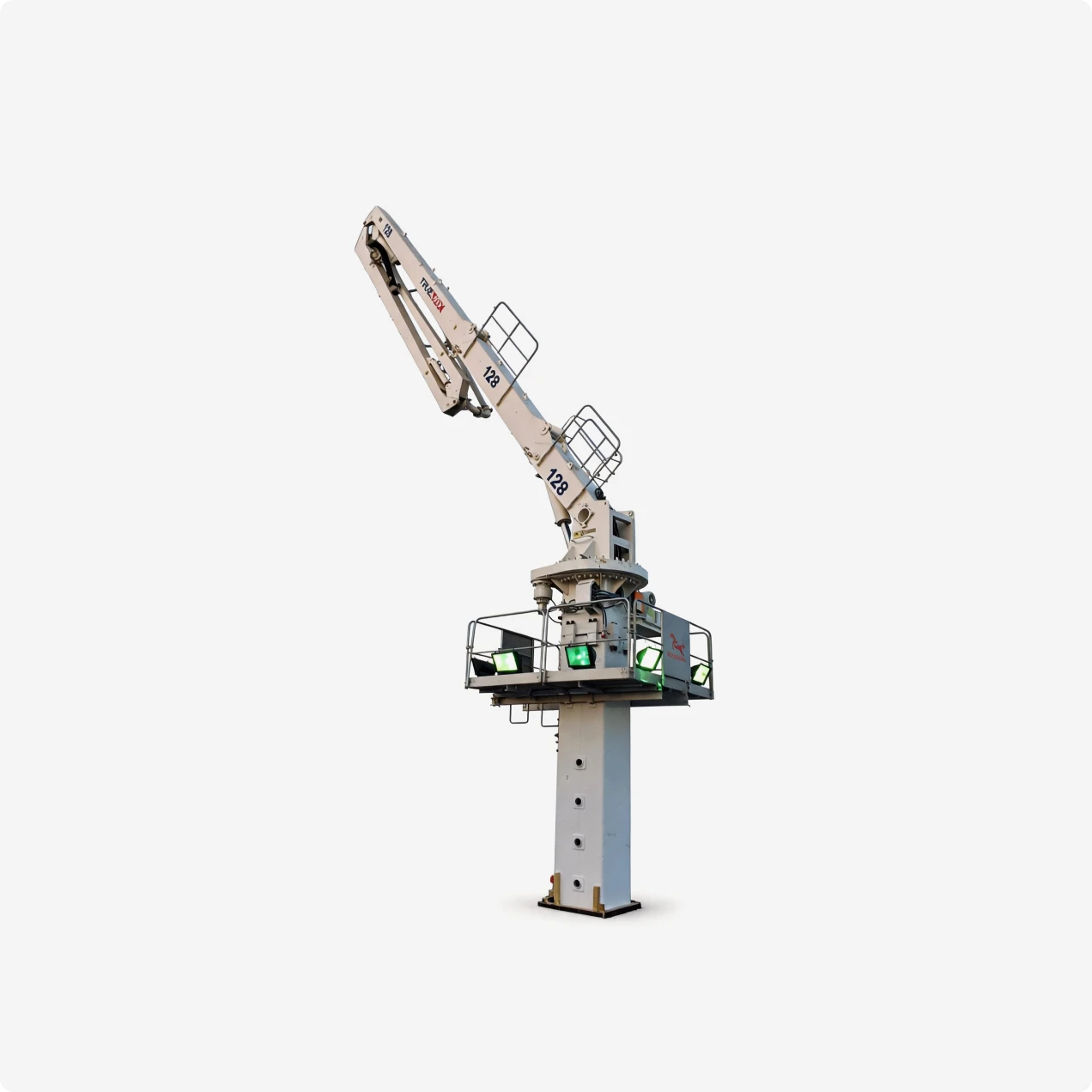
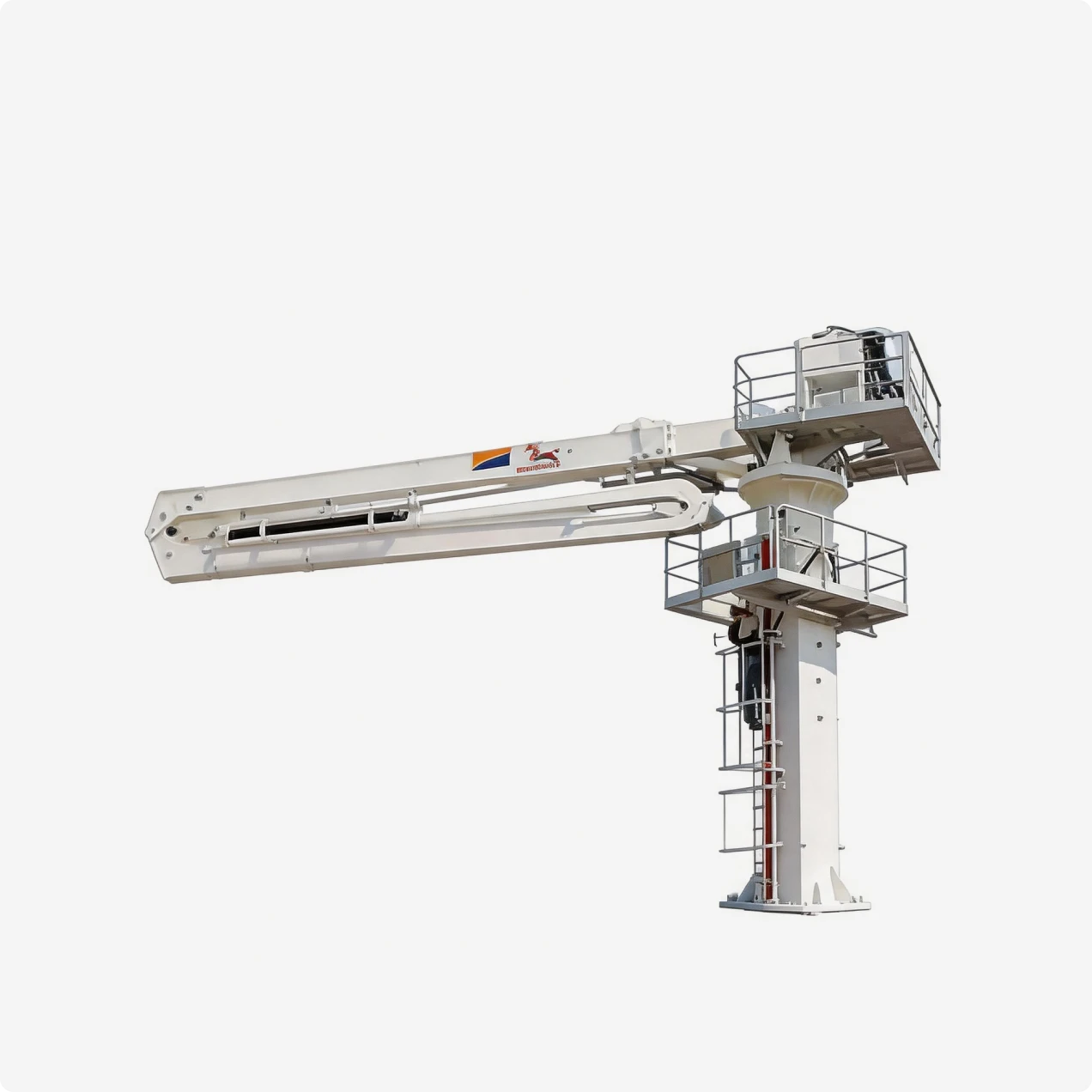
A concrete placing boom — also called a placer boom, placement boom, concrete distributor or stationary boom placer — is the equipment that distributes pumped concrete across a deck or pour area without the crew re-laying delivery hose between pour points. It works downstream of a stationary or line pump: the pump drives concrete up a fixed riser pipeline, the boom takes that concrete at the working level and slews 360° to place it at any point within its radius. On high-rise and large-deck work, the boom is what turns one pump outlet into full coverage of the floor.
What a placing boom is made of
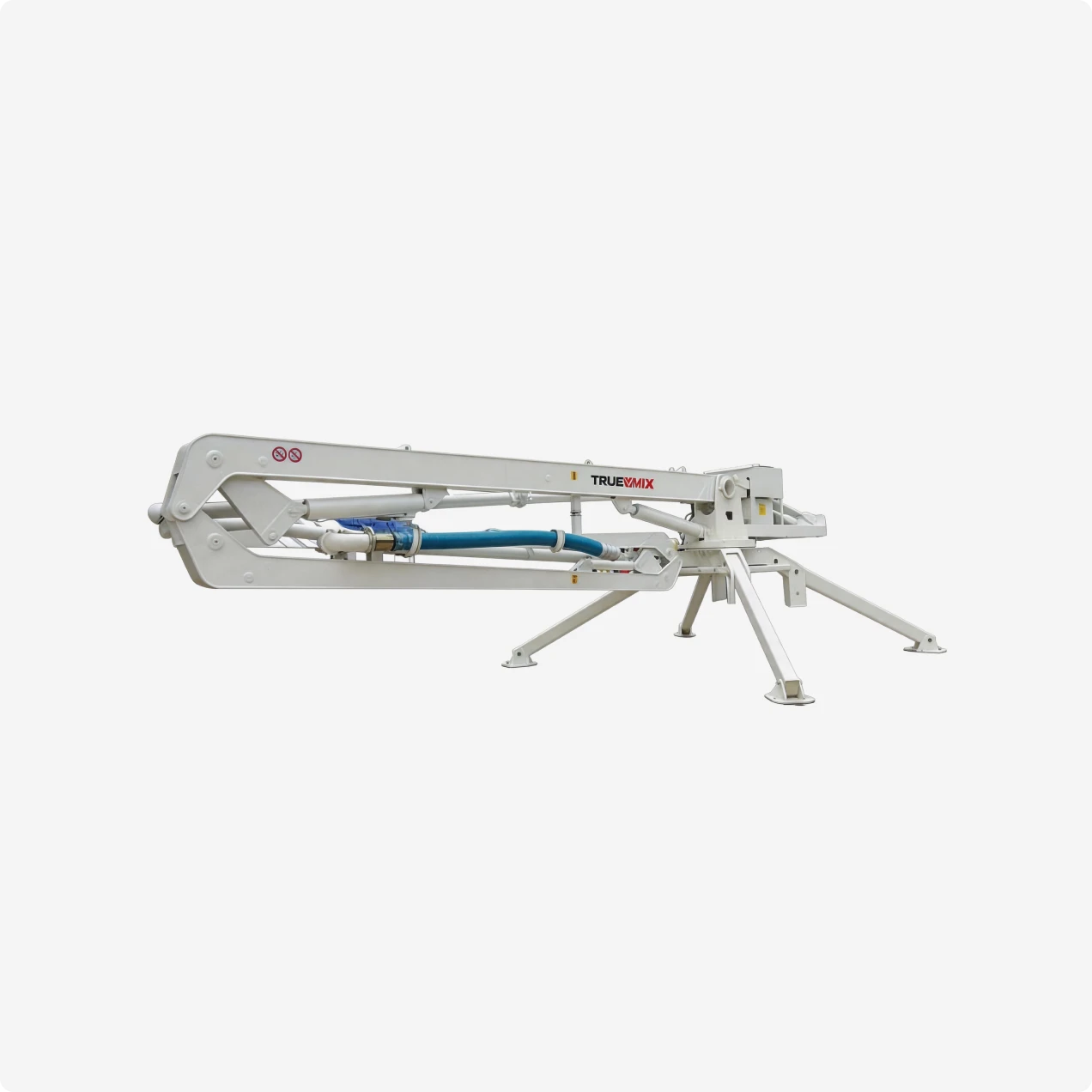
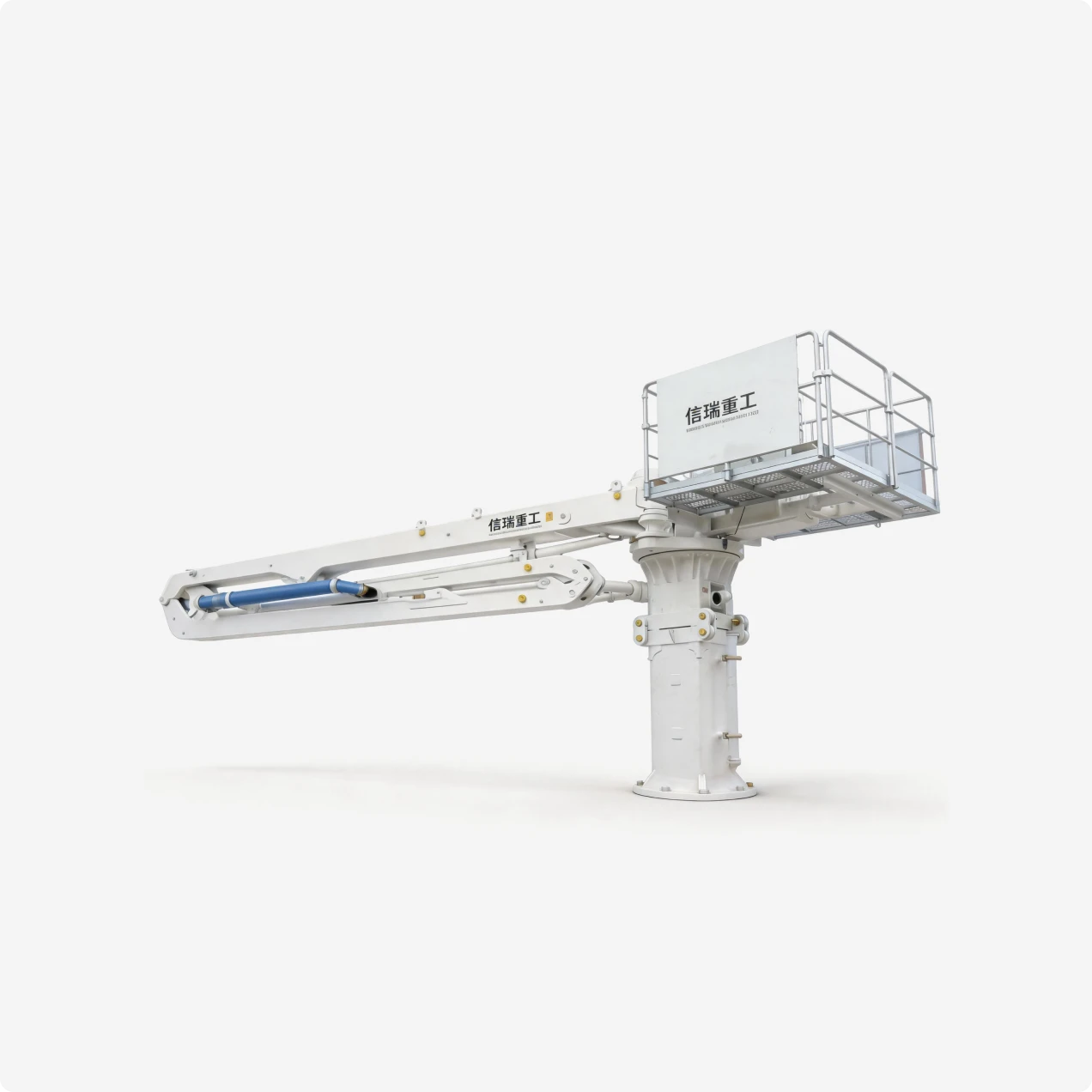
Every TRUEMAX boom has the same five functional groups: the base structure (column, spider legs, tower mast, or boat platform — depending on type), the slewing bearing (single-row or double-row ball/roller bearing with 360° continuous rotation), the articulating arm (3, 4 or 5 sections in R-fold geometry), the concrete pipeline running along the arm (Φ125 mm hardened steel pipe with 5″ end hose), and the hydraulic and control system (proportional valves, accumulator, radio remote, optional cable backup).
Boom sections are fabricated from high-strength low-alloy (HSLA) steel with yield strength ≥ 900 MPa — about 2.6× ordinary structural steel — and every weld passes 100% non-destructive testing (NDT) per AWS D1.1 before the boom leaves the Haining factory. Geometry is verified by finite element analysis (FEA) for the full operating load envelope, including dynamic loads from pumping pulses, off-centre concrete loads in the delivery line, and wind on the extended boom.
How a placing boom is fed
The boom does not generate pressure — it conducts concrete that arrives under pressure from the pump. Typical configuration on a high-rise:
- A stationary high-pressure pump (TRUEMAX SP series, 18–23 MPa) sits at ground or low level
- A riser pipeline of Φ125 mm hardened seamless steel pipe runs vertically inside the building core, anchored to the structure at every floor and braced through hardened bends
- At the working storey, the riser connects to the boom's pipeline inlet at its base
- The boom routes concrete through its internal pipe along each arm section to the 5″ end hose at the tip
Pressure budget: vertical pipe loses about 1 bar per 4–5 m lift; each 90° bend costs 1–2 bar; the boom's internal pipe adds another 5–10 bar depending on arm count. A 23 MPa pump comfortably reaches a placing boom on a 200 m high-rise with engineering margin.
Six placing boom types
| Type | Mounting | Radius | Best for |
|---|
| Column-climbing | Mast anchored to building columns | 27–35 m | High-rise typical-floor cycles |
| Formwork-climbing | On jump-form / self-climbing formwork | 21 m | Core-wall jump-form construction |
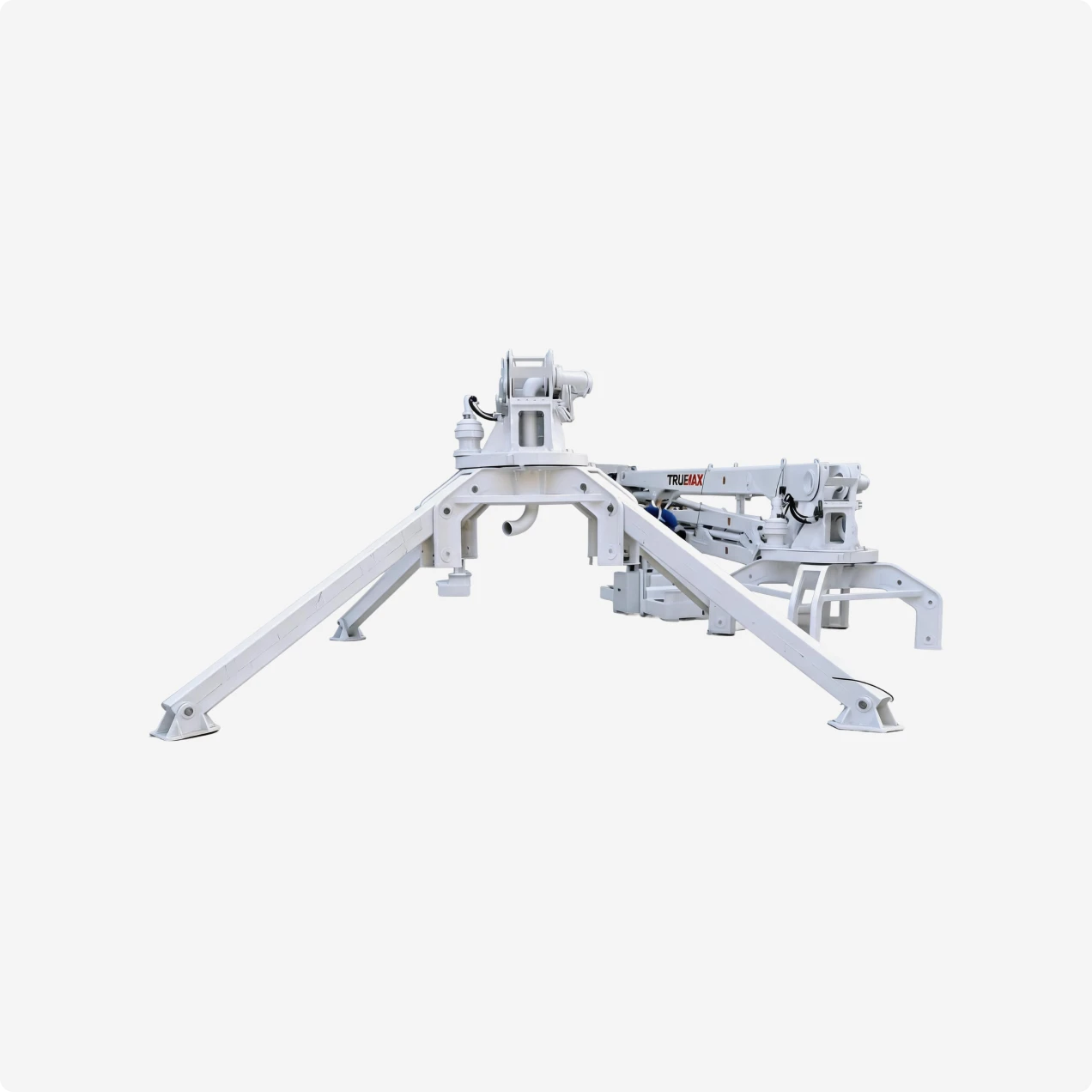
| Spider | Four extending outrigger legs on slab | 17–21 m | Mid-rise, podium, single-floor pours |
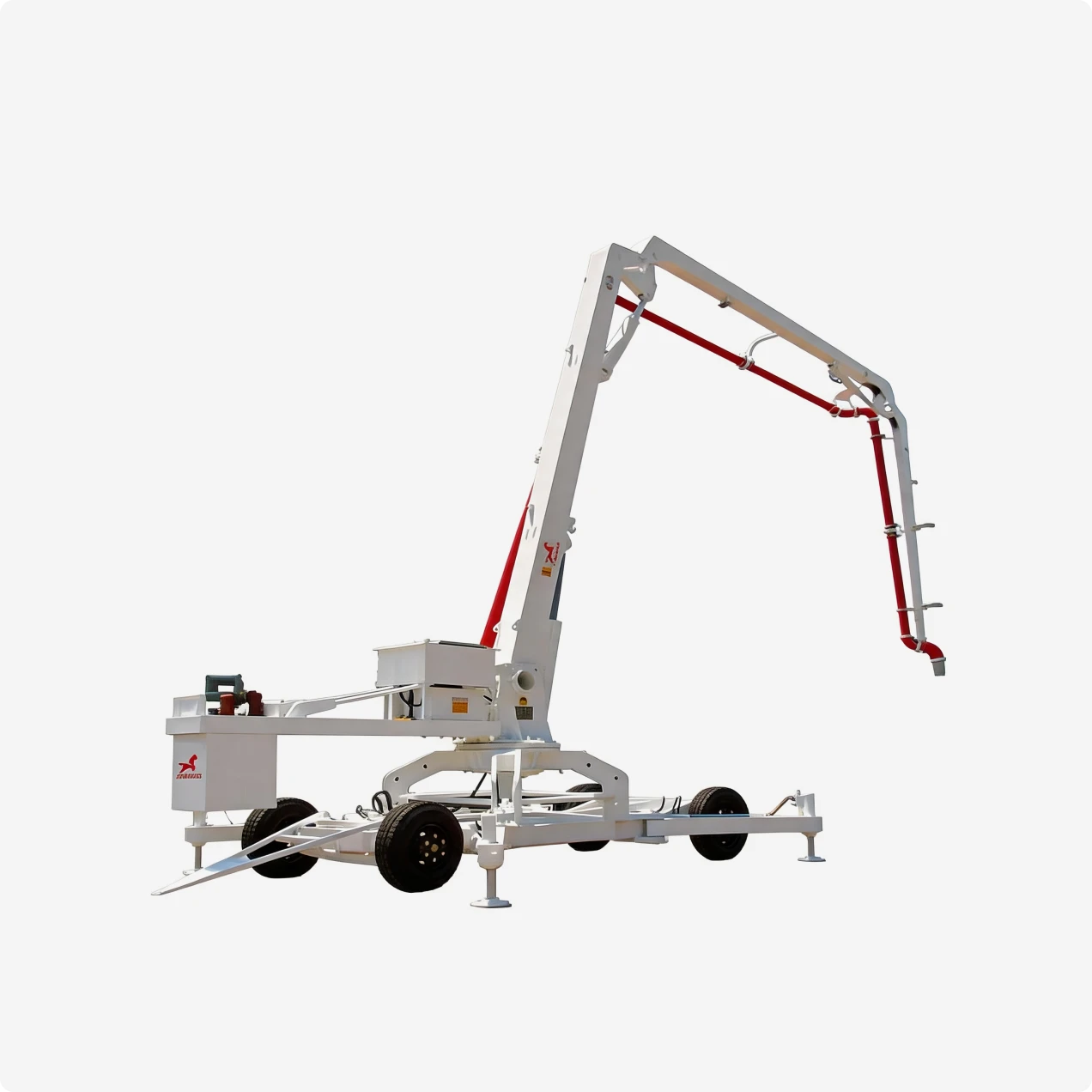
| Mobile wheeled | Wheeled trolley on slab | 17 m | Very large slab pours |
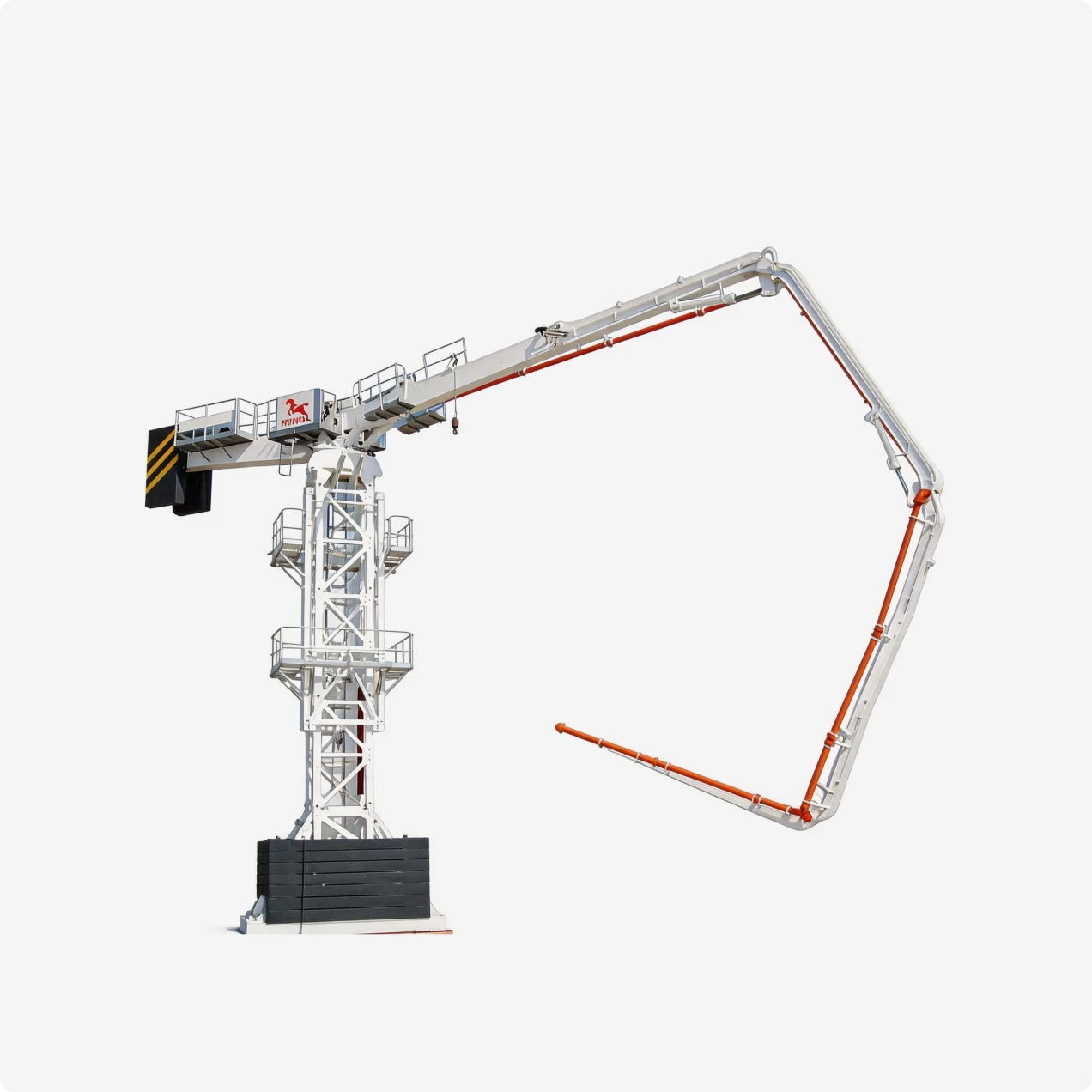
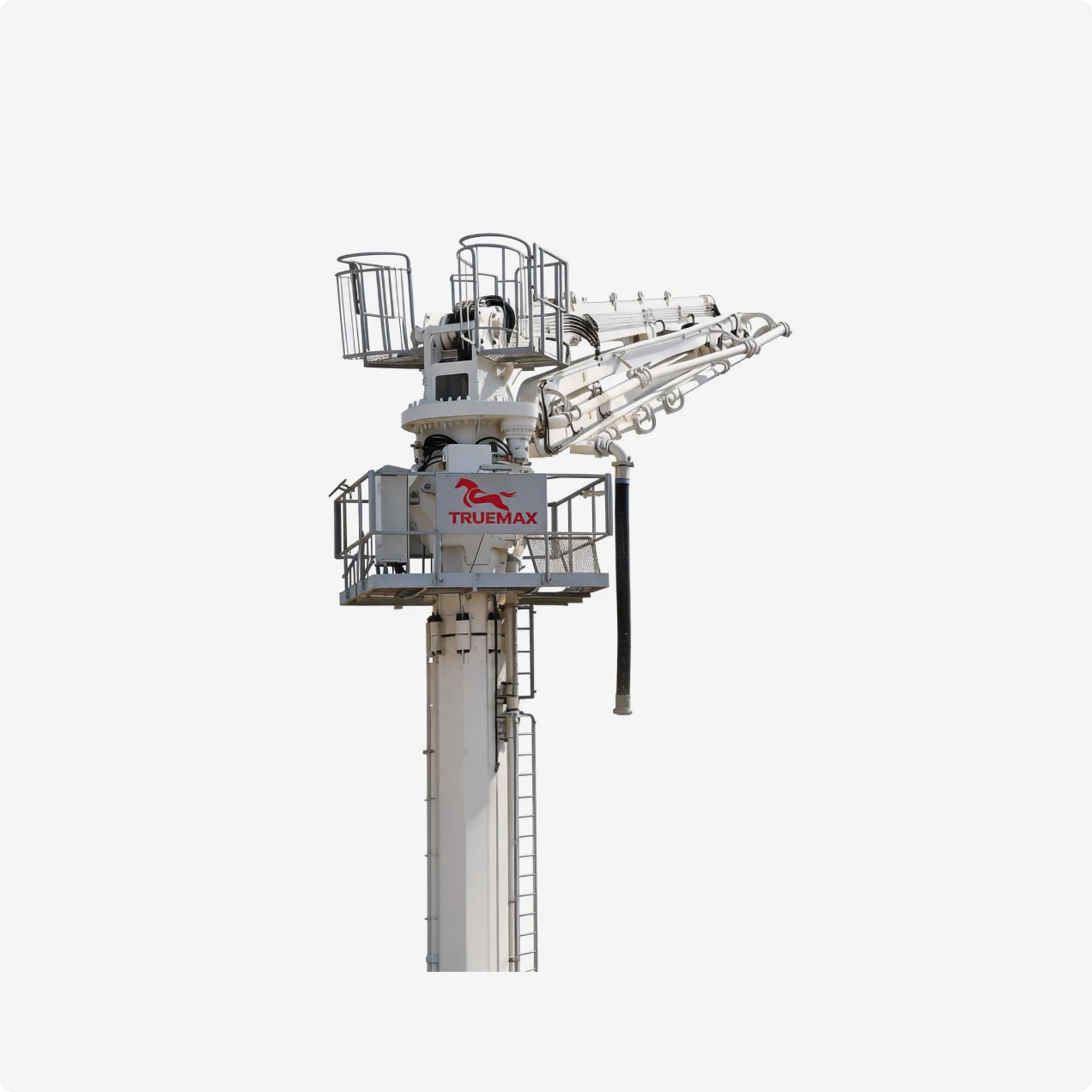
| Lattice tower | Free-standing tower-crane-style mast | 38–51 m | Maximum reach, irregular structures |
| Mobile boat | Boat or barge mounted | 21 m | Over-water precast, marine bridges |
The model number is the placing radius in metres — PB28A ≈ 28 m, PB35A = 35 m, PB51AT = 51 m. Radius must cover the pour area from the boom's set-up point; for large floor plates plan for multiple boom positions or multiple tower bodies.
Climbing modes
A column-climbing boom rides a steel mast anchored at intervals to the building's structural columns. The climb is a fix-pour-lift cycle: pour the working floor, then the boom's hydraulic cylinders lift it to the next anchor level — usually one climb covers two floors, taking 30–60 minutes. No external crane is needed for the climb itself.
A formwork-climbing boom is mounted to the jump-form or self-climbing formwork system and rises with the formwork. The boom moves whenever the form moves.
A spider boom does not climb — when the floor is poured out, the tower crane lifts it to the next floor and re-deploys it on its outrigger legs. The PB17B's 1,520 kg main-lift-unit weight is sized to typical tower-crane pick capacity.
A lattice tower boom stands free on its own foundation up to 40–46 m (PB38BT-4R-E, PB51AT-4R-E), with ties to adjacent structure for greater heights.
Standards, control and operation
TRUEMAX placing booms conform to EN 12001:2012 safety requirements for concrete placing equipment, ISO 21573-1/2 terminology and test methods, and ISO 9001:2015 quality management. CE-marked for EEA market entry.
Control is by radio remote with cable-remote backup as standard. Tower models add electro-hydraulic proportional control for steadier movement at full reach. A single operator runs slewing, arm extension and end-hose tilt from the pour point. Standard interlocks: outrigger / mast anchor verification before deployment, slewing limits in transport configuration, load-sensing hydraulic flow control for shock-free movement.
For procurement engineers: send us the floor layout, structural system (column-climbing-capable or not), tower crane availability, and pour-height range — we recommend the boom type, model and mounting configuration. For high-rise pumping packages combining pump + riser + placing boom, see the High-Rise Concrete Pumping solution page.