Learn More About Concrete Truck Mixers
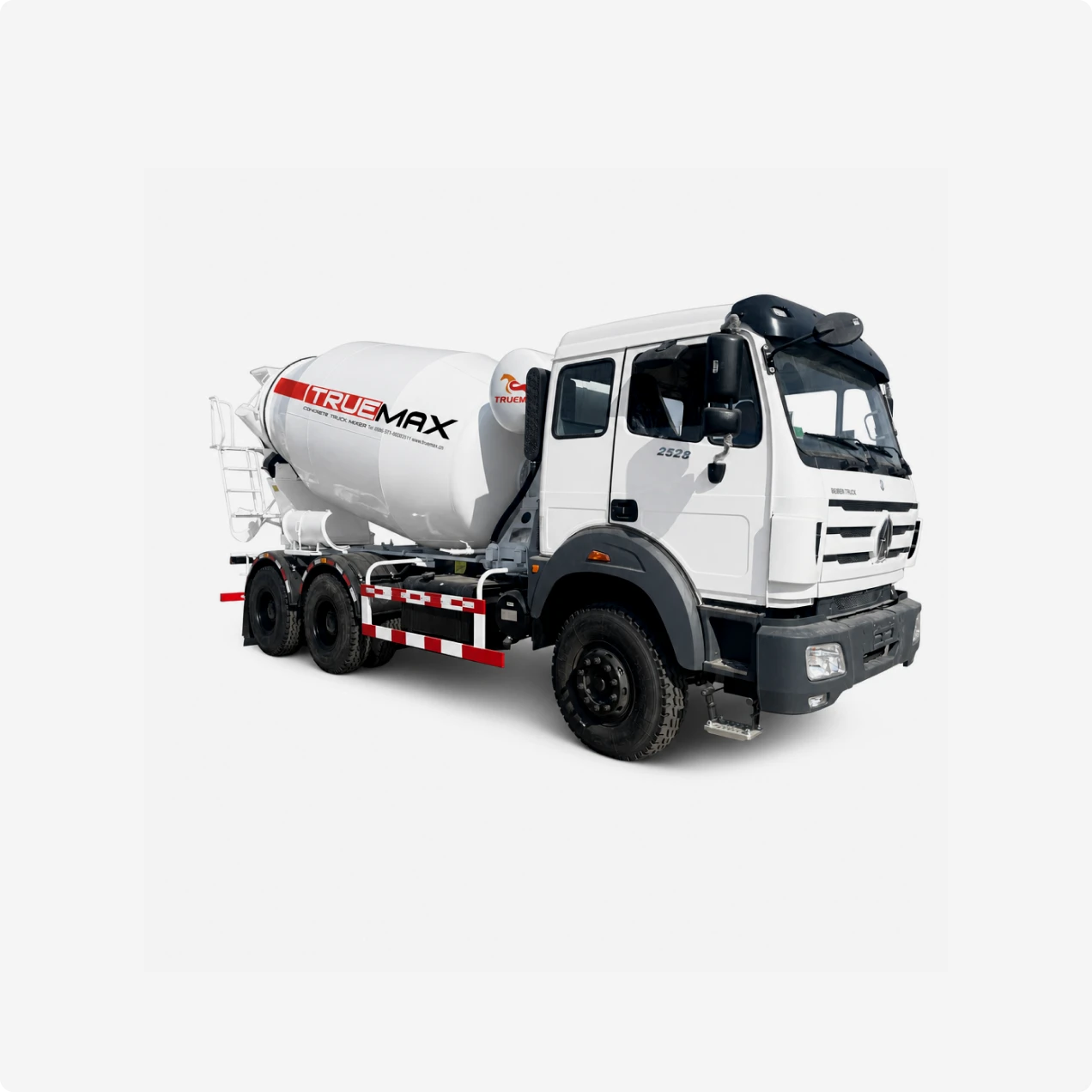
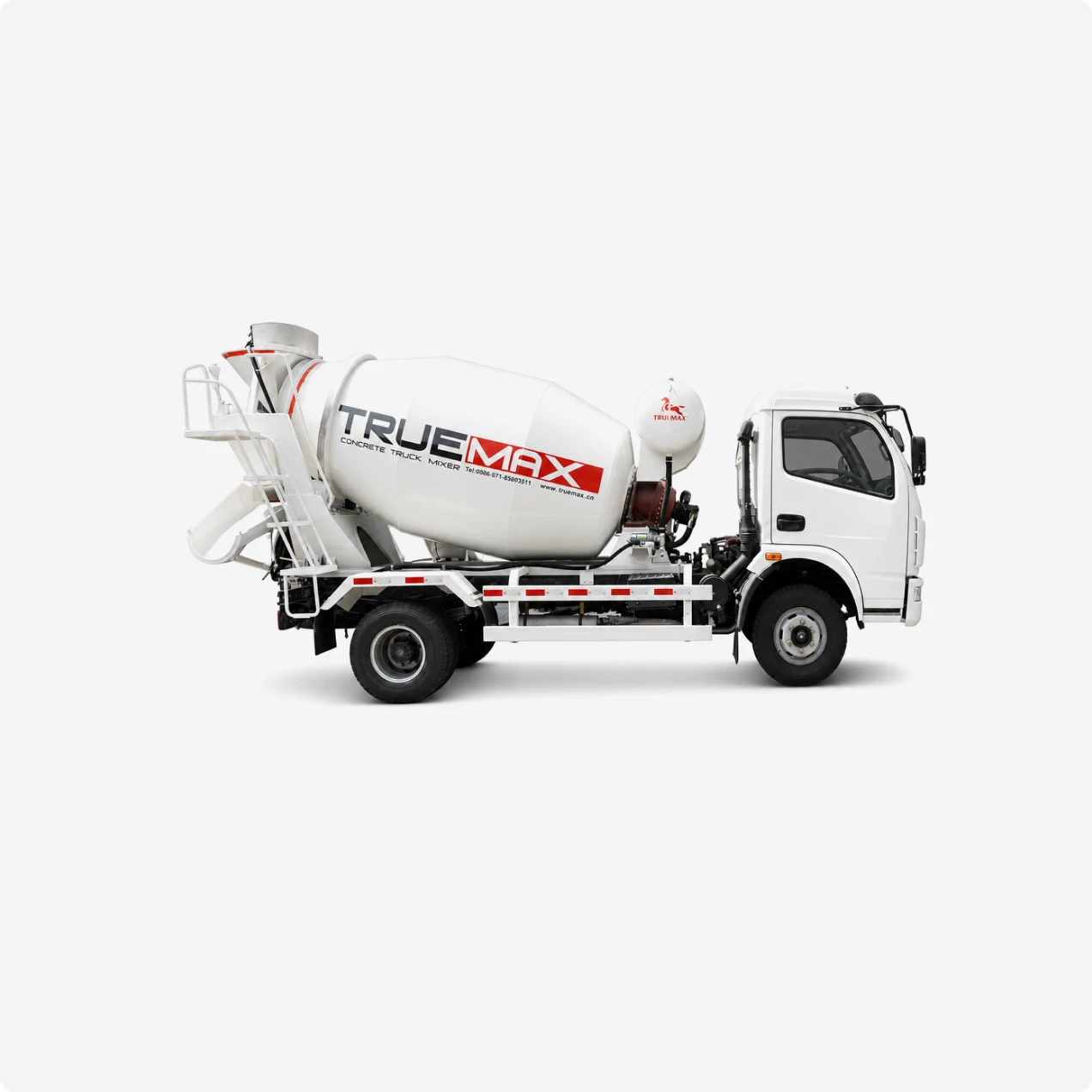
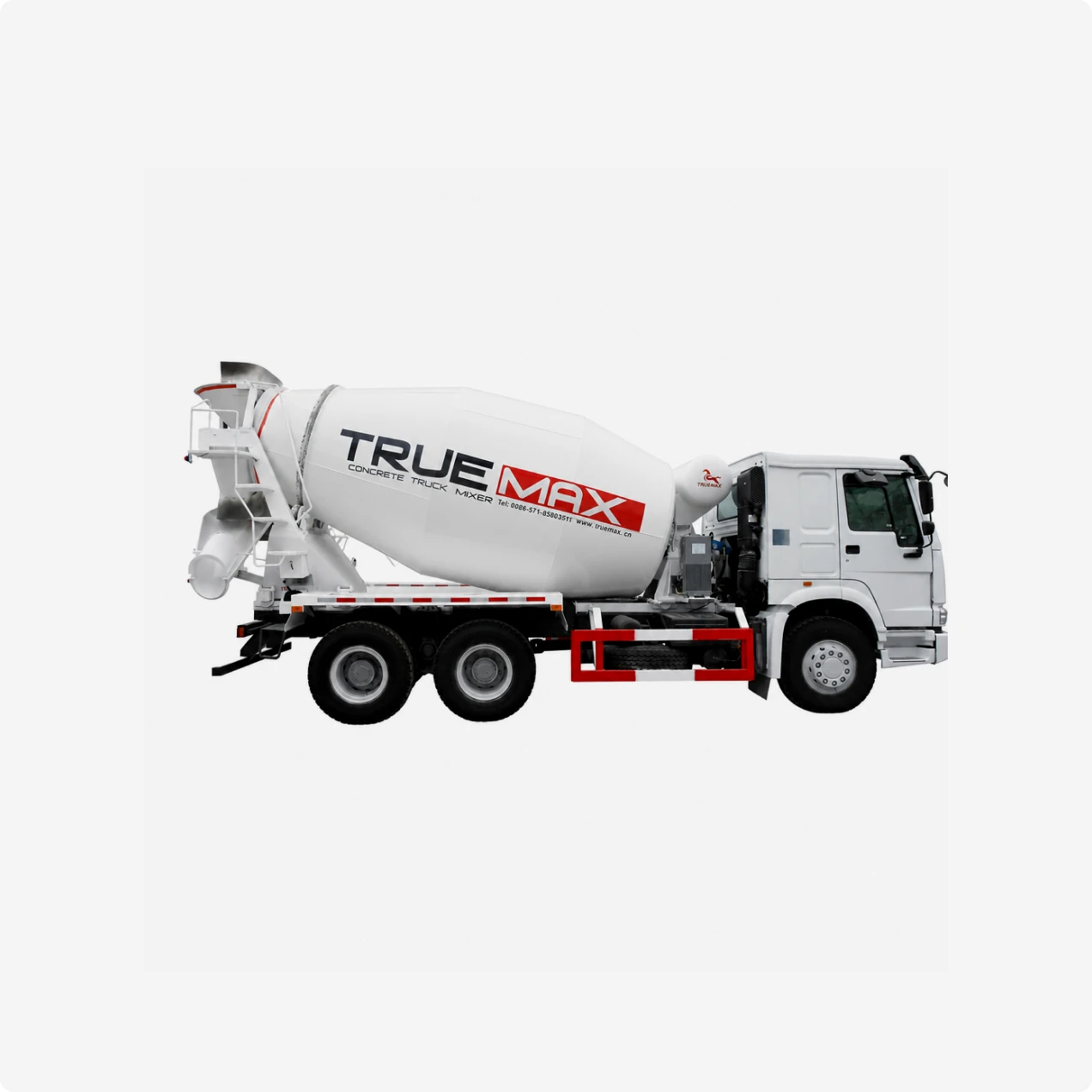
A concrete truck mixer is a truck-mounted rotating drum that transports ready-mix concrete from a batching plant to the placement point while keeping it workable. The same machine carries several names: transit mixer, mixer truck, concrete mixer lorry in the UK, ready-mix truck or RMC truck in South Asia, and agitator truck or concrete agitator in North America, where the emphasis is on the drum agitating the load rather than producing it. They all describe one type of equipment — a drum transit mixer — and should not be confused with a volumetric mixer, which batches and mixes dry materials on board and is a different machine TRUEMAX does not build in this range.
How the drum mixes and agitates
The drum sits on an inclined axis — 12 to 16° across the CTM range — and is lined with helical blades that act as an Archimedes screw. Rotated one way during charging and transit, the blades draw concrete inward and fold it back on itself, keeping aggregate suspended in the paste so the load does not segregate or stiffen prematurely; reverse the rotation and the same blades drive the concrete out to the rear chute. Drum speed is variable from 0 to about 14 r/min: low speed agitates a mixed load in transit, higher speed mixes or remixes and speeds discharge. On the CTM range, charging runs at 3 m³/min or more and discharging at over 1 m³/min, so loading and unloading do not become the bottleneck in a delivery cycle. Because the drum does mechanical work continuously, its interior and blades are the main wear surfaces — the reason they are built from 520JJ wear-resistant steel rather than mild plate.
Rated capacity, fill rate and how it is measured
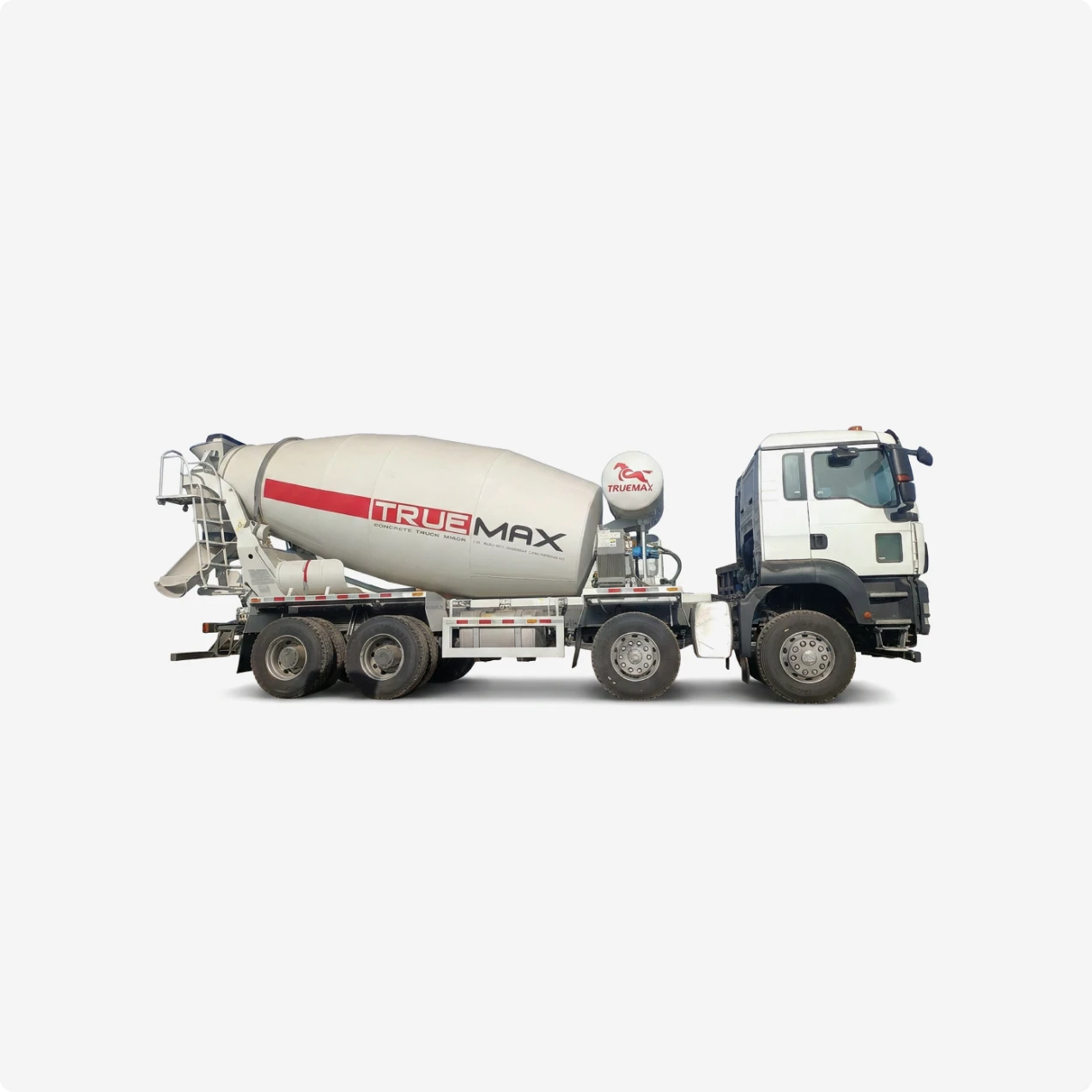
The figure in the model name is rated concrete capacity — the volume of mixed concrete the truck is designed to carry, not the size of the drum. The geometric drum volume is larger, about 1.4 to 1.6 times the rated figure, because mixed concrete needs head space to tumble; put the other way, the drum is filled to a padding (fill) rate of roughly 62–69% of its geometric volume. A CTM10 therefore pairs a 14.4 m³ geometric drum with a 10 m³ rated load. Units differ by market: most of the world rates mixers in cubic metres, while North America uses cubic yards, so a 10 m³ drum is about 13 cubic yards — which is why the same machine is searched as a 6-yard, 8-yard or 10-yard concrete truck. Drive configuration is often quoted as a wheeler count: a 6-wheeler is a 6×4 with three axles, an 8-wheeler an 8×4 with four.
Payload, weight limits and chassis
What a mixer can legally carry is usually set by axle weight limits, not by the drum. Fresh concrete weighs roughly 2.4 tonnes per cubic metre, so a 10 m³ load is about 24 tonnes before the chassis and drum are counted. That is why capacity steps up with axle count: lighter 4×2 and small chassis suit 3–6 m³ urban and short-haul work, 6×4 chassis carry around 8–10 m³, and 8×4 chassis are needed for 12–14 m³. Because the mixing barrel is engineered as an upper part, it is mounted on the chassis that matches the registration, emission standard and road limits where the truck will run — Sinotruk, HOWO and Sitrak as standard, or another brand on request — rather than forcing one chassis on every market.
Keeping ready-mix workable in transit
Concrete is perishable. Slump falls as cement hydrates, faster in heat, so a load that left the plant workable can arrive stiff. Many ready-mix standards cap the haul at around 90 minutes or 300 drum revolutions from batching to discharge for this reason. The drum and blade geometry is designed to hold slump variation within about 5% through the discharge stages across a 50–210 mm slump range, and the onboard pneumatic water system lets the operator wash the drum and chute and add water to the approved mix on arrival when permitted. In practice, short hauls, steady agitation in transit, and water managed on site are what deliver a consistent slump to the pour — the truck protects the mix the plant produced, it does not rescue one that has been on the road too long.
Wear, residual and operating cost
Over a working life the drum, blades and chute liners are consumables, and two figures drive their cost. The first is wear: 520JJ steel through the barrel and blades, wearing strips on the blade edges, and multi-layer liners on the charging and discharging chutes extend service life on the surfaces that abrade fastest. The second is residual — the concrete left clinging inside after discharge. A residual rate of 0.2% or less means very little concrete is wasted per load, far less hardened build-up to chip out, faster washdown, and a more accurate delivered volume. Across a fleet running several loads a day, low residual and long wear life are recurring savings, not one-time specifications, which is why they belong in any concrete mixer truck comparison alongside capacity and chassis.
Where the truck mixer fits in the ready-mix chain
A transit mixer is one link in a continuous chain: the batching plant proportions and mixes the concrete, the mixer delivers it workable, and a concrete pump or placing boom moves it to the point of placement. The mixer sets the rhythm of the pour — a pump can only place as fast as trucks arrive — so fleet size and round-trip time are planned together with batch output and placing rate, not in isolation. On a continuous high-rise or large-slab pour the limiting factor is the slowest link: too few mixers and the pump idles; too many and trucks queue while slump drifts. Matching mixer capacity and number to the plant's output in m³/h and the pump's placing rate is the core of delivery planning, and the reason ready-mix operators size a fleet against typical pour volume and haul distance rather than buying the largest drum available.