

Buying a concrete batching plant is one of the larger capital decisions a concrete producer makes. The plant outlives the construction crew that installed it, outlives the engineers who specified it, and produces the concrete that everything else on the project depends on. A wrong plant is hard to walk back from.
The three plant types — stationary, modular and mobile — are not just three sizes of the same machine. They're three different answers to three different questions about where, for how long, and at what rate you need to produce concrete. This guide walks through the differences, when each is the right pick, and how the TRUEMAX range maps to actual buying decisions.
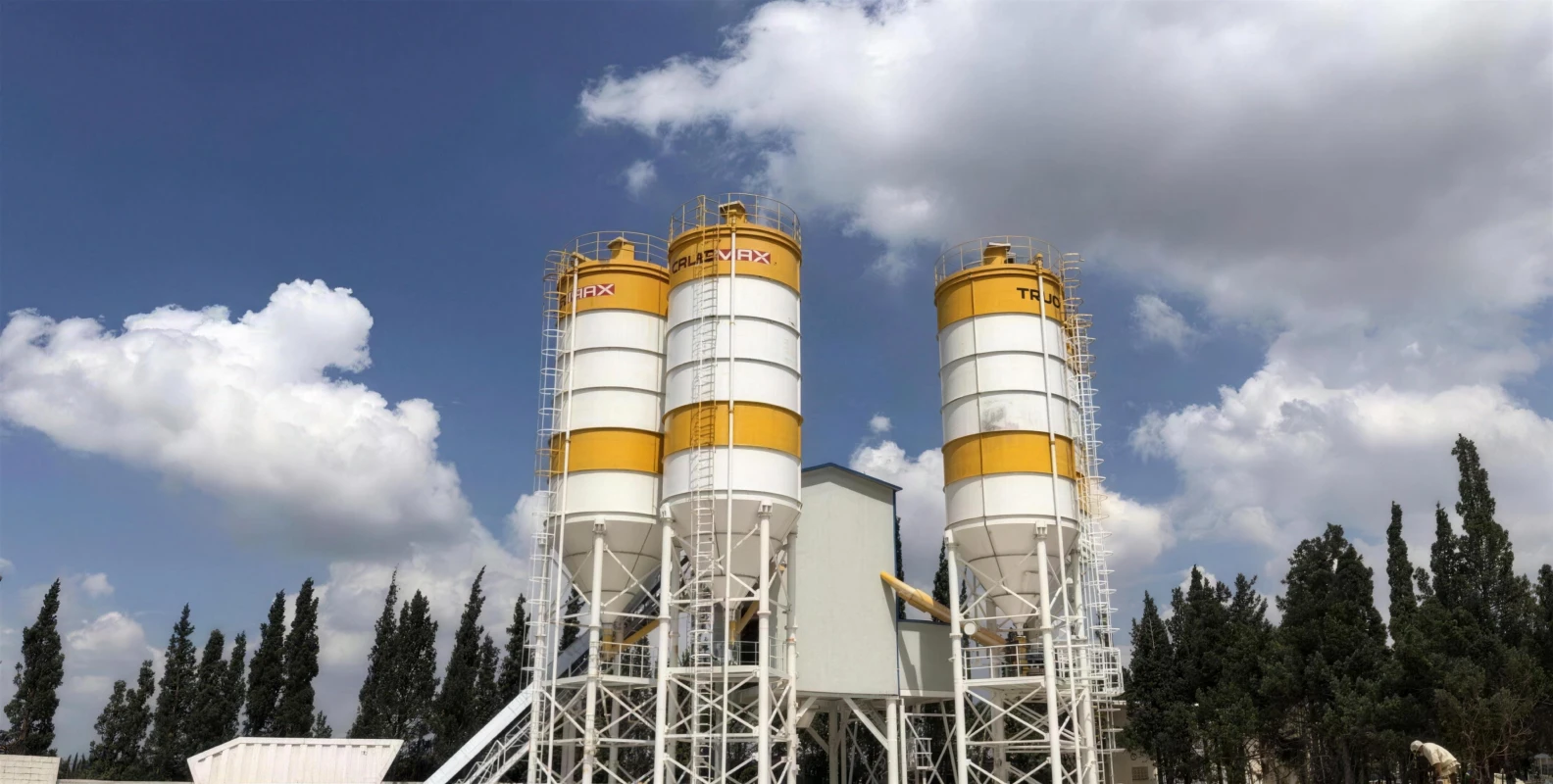
The Three Types in One Comparison
| Feature | Stationary | Modular (Container) | Mobile (Trailer) |
| Typical output range | 60-240 m³/h | 180-240 m³/h | 60-100 m³/h |
| Foundation requirement | Permanent reinforced concrete | Light foundation, container-frame supported | Levelled hardstand, no foundation |
| Set-up time | Weeks for full plant | ~3 hours for main plant erection, days for commissioning | Hours for plant positioning, days for commissioning |
| Mobility | Fixed in place for service life | Dismantles for project-end transport | Towable between sites on its own undercarriage |
| Best for | Long-term ready-mix and RMC operations at one location | Time-limited but fixed-site projects (precast, infrastructure project plant) | Travelling contractors, remote sites, multi-contract regional work |
| TRUEMAX models | CBP60S, CBP120S, CBP180S, CBP240S | CBP180C, CBP240C | CBP60M, CBP100M |
Stationary Concrete Batching Plant — When the Plant Stays Put
The stationary plant is the default specification for permanent concrete operations. Aggregate stockpiles feed the plant from one side; cement silos sit beside it; truck mixers load underneath. The plant sits on a reinforced concrete foundation and operates from one location for its 15-25 year service life.
When stationary is the right pick
• Commercial ready-mix (RMC) operation supplying a city or region for the long term
• Permanent precast operation (paving blocks, panels, hollow-core slabs)
• Major construction project of 3+ years' duration where a single fixed plant location is in haul range of the work
• Operations that need the highest output rates (180-240 m³/h+) — only stationary plants reach this band economically
TRUEMAX stationary range
Four output sizes:
• CBP60S — 60 m³/h, JS1000 1500 L twin-shaft mixer, 3-bin aggregate, entry plant for small RMC operations
• CBP120S — 120 m³/h, JS2000 3000 L mixer, 4-bin aggregate, the workhorse mid-size
• CBP180S — 180 m³/h, JS3000 4500 L mixer, larger structural-concrete projects
• CBP240S — 240 m³/h, JS4000 6000 L mixer, 5-bin aggregate, flagship for large RMC and major infrastructure
All four plants share the same accuracy spec (±1% on cement, water, additive; ±2% on aggregate) and the same control system options (TRUEMAX or Italian Elettrondata Betonwin). The CBP240S adds a 5-bin aggregate batcher (5×40 m³) versus 4-bin on the smaller plants — which is the only real differentiator that matters for advanced mix designs needing 5 different aggregate fractions.
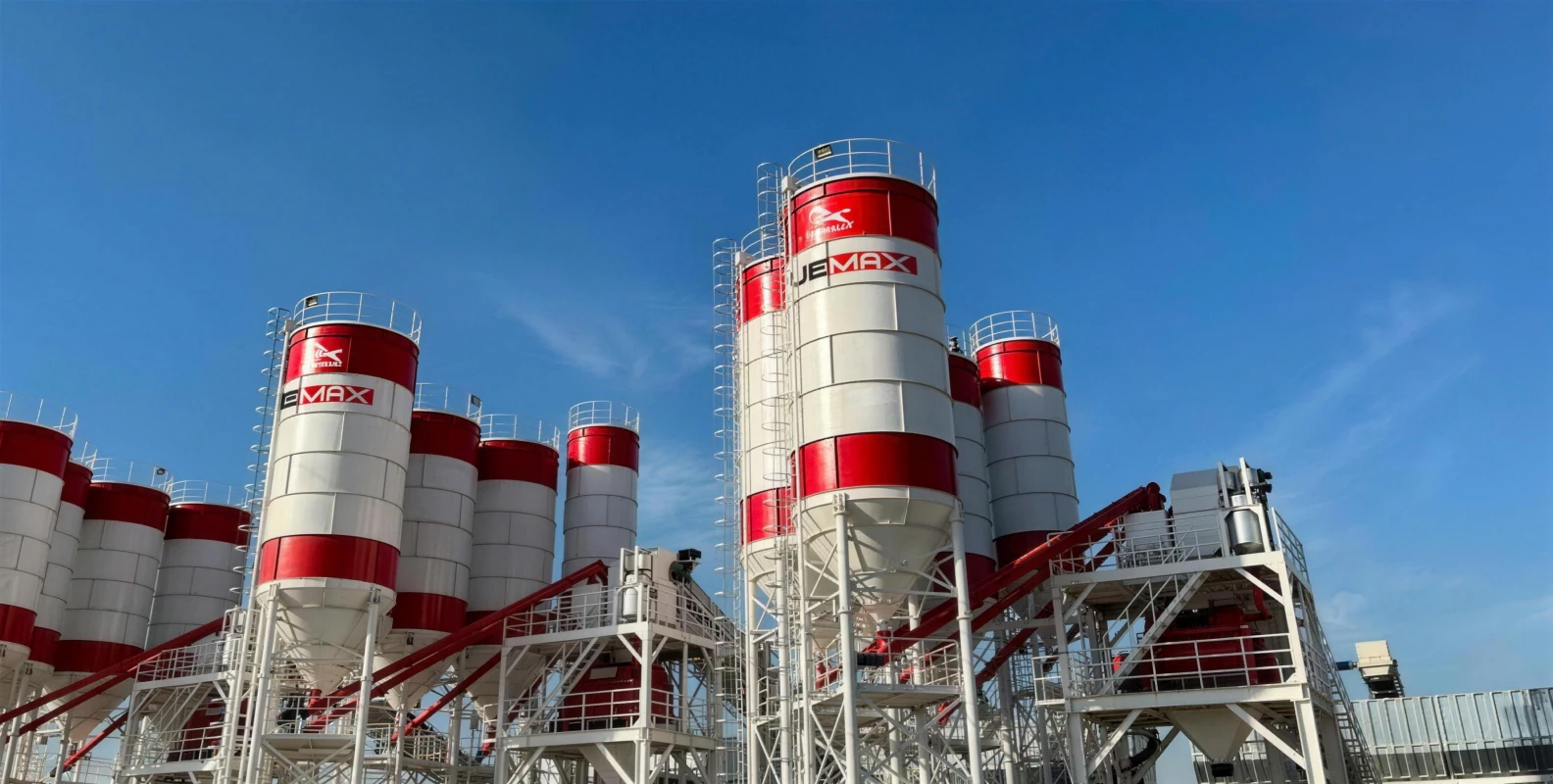
Modular (Container-Design) Concrete Batching Plant — Fast Erection, Dismantles Later
The modular plant is the answer to: 'I need a 180 m³/h plant for a 3-year project, then I need to dismantle it and ship it to the next project.' The plant ships in container-sized modules that pre-engineered to slot together. Main plant erection takes approximately 3 hours (electrical and commissioning take longer). At project end, the plant dismantles in the reverse process for transport.
When modular is the right pick
• Project-led precast factories (tunnel-lining segment factories, bridge-beam yards, project-specific plants)
• Major construction projects of 2-5 years where dismantling and reusing the plant on the next project gives better economics than buying a dedicated stationary plant per project
• Operations in markets where local construction restrictions or land lease terms favour relocatable plants
• Time-sensitive projects where the speed of erection actually affects the construction schedule
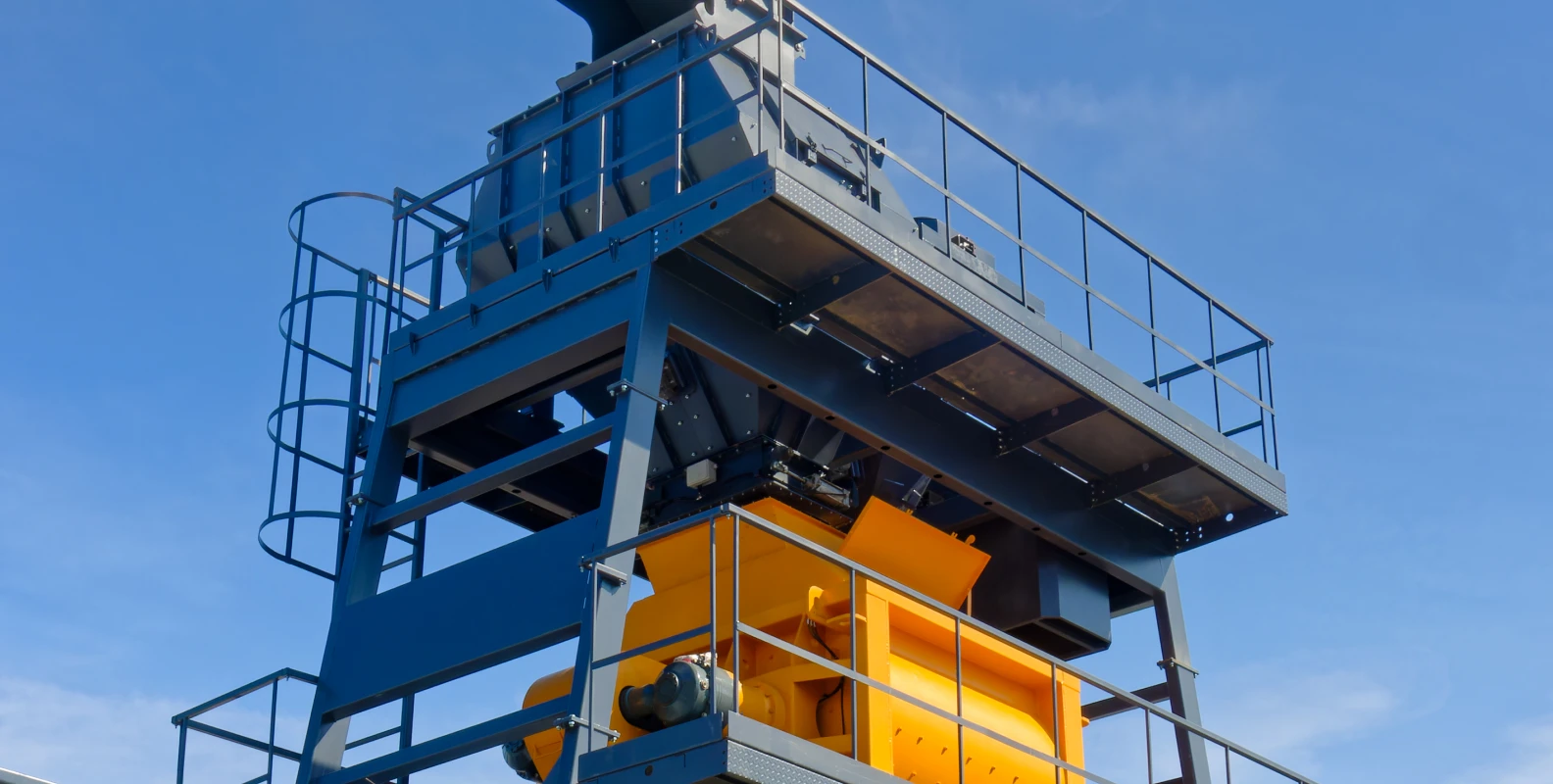
TRUEMAX modular range
Two models cover the size band where modular plants make sense:
• CBP180C — 180 m³/h, JS3000 mixer, container-design erection in ~3 hours main plant
• CBP240C — 240 m³/h, JS4000 mixer, 5-bin aggregate, the same accuracy and capacity as the stationary CBP240S but in modular form
The trade-off versus stationary: slightly higher capital cost (~10-15% premium), and the modular erection means the plant is designed for repeated assembly/disassembly rather than one-shot construction. For project lives under 5 years, the modular plant typically wins on total cost; over 10 years, the stationary equivalent typically wins.
Mobile (Trailer) Concrete Batching Plant — Plant That Travels
The mobile plant is built on a towable trailer chassis with a folding belt conveyor for the aggregate feed. It travels under its own undercarriage between sites — towed by a tractor or heavy hauler. Set-up at a new site is positioning, levelling, unfolding the conveyor and connecting silos and electrical supply: hours, not days.
When mobile is the right pick
• Highway and rail contractors who work along the alignment — the plant tows from one section to the next every 6-18 months
• Multi-contract regional contractors who use one plant across several short-to-medium projects per year
• Remote and access-limited sites where erecting any fixed plant is impractical
• Emergency, disaster relief and military construction where rapid concrete supply is needed in places that have no plant
TRUEMAX mobile range
• CBP60M — 60 m³/h, JS1000 mixer, the smaller mobile, with 4-bin aggregate (versus 3-bin on the stationary CBP60S — the extra bin helps when the plant moves between sites with different aggregate supply)
• CBP100M — 100 m³/h, JS2000 mixer, the larger mobile, with honest disclosure: the JS2000 on a mobile chassis runs a 72-second cycle (versus 60 seconds on the stationary CBP120S using the same mixer) for stability reasons, which is why the rated output is 100 m³/h instead of 120
The 100 m³/h ceiling on the largest TRUEMAX mobile plant is realistic — building bigger mobile plants creates road-transport problems (axle weight, overall width, tractor capacity) that outweigh the benefits. For projects sustaining over 100 m³/h that also need mobility, the modular CBP180C and CBP240C are the alternative.
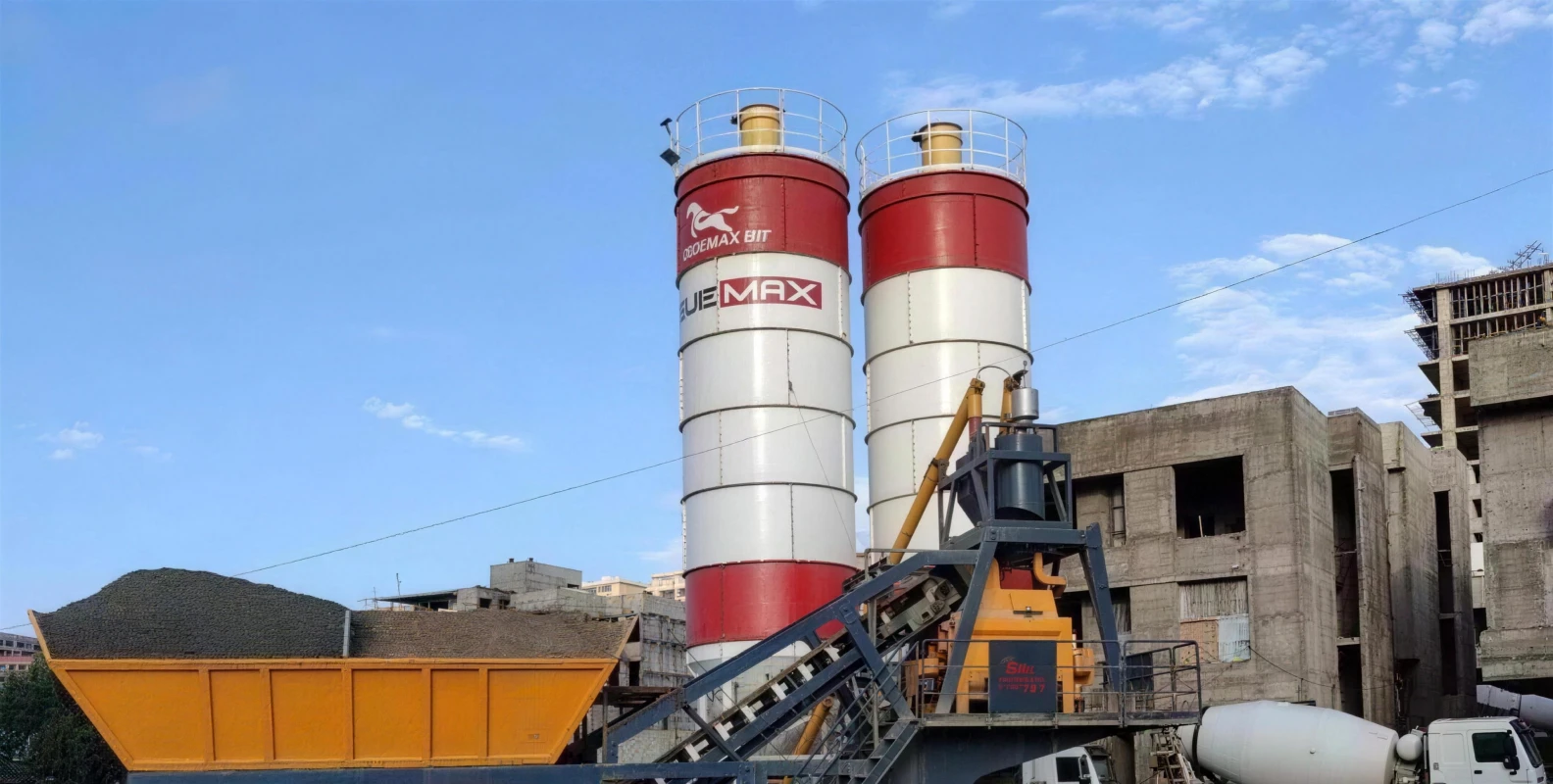
Which Plant Type Does Your Project Actually Need?
Walk through these in order:
1. Will the plant stay in one location for more than 10 years? → Stationary. (Permanent RMC, permanent precast.)
2. Will the plant operate for 3-10 years and then transition to a new project? → Modular if output is 180-240 m³/h. Stationary if output is below 180 m³/h (mobile plants top at 100, modular plants start at 180).
3. Will the plant move between sites within its operating life? → Mobile if output stays at 100 m³/h or below; modular if output exceeds 100 m³/h.
4. Is the site so remote that no major equipment can be erected there? → Mobile.
After plant type, three other decisions matter: aggregate inventory (3-bin for simple mixes, 4-bin for typical RMC, 5-bin for advanced infrastructure and precast mixes), mixer brand (TRUEMAX's own twin-shaft, SICOMA, or BHS), and control system (TRUEMAX or Italian Elettrondata Betonwin). Output and accuracy are essentially the same across these choices for plants of the same size class.
Frequently Asked Questions
What's the lifespan of a concrete batching plant?
Stationary plants typically run 15-25 years before major refurbishment. The structural frame, silos and aggregate batcher last 25-30+ years. The mixer is rebuilt every 8-12 years (replacing wear plates, blades and seals). Control systems are typically updated every 10-15 years as electronics generations change. Modular plants last similar to stationary; mobile plants are typically replaced after 12-18 years due to chassis wear from repeated transport.
How much does a concrete batching plant cost?
Indicative ranges (export, ex-works, plant unit only excluding silos and installation): CBP60S/M from around $80,000-150,000. CBP120S/100M from around $200,000-400,000. CBP180S/180C from around $400,000-700,000. CBP240S/240C from around $700,000-1,200,000. Add 20-40% for silos, screw conveyors, foundation design and on-site commissioning. Final pricing depends on configuration, automation level, mixer brand, control system and destination. We'll quote your exact specification on enquiry.
How accurate are the batching plants?
TRUEMAX plants hold ±1% accuracy on cement, water and additive batching, and ±2% on aggregate batching. This is the accuracy required for high-grade structural concrete and meets ISO 9001:2015 quality standards. The plants use three-point pull-weighing systems with double-speed coarse and fine weighing, plus air-exchange compensation between the powder weigher, mixer and storage hopper to prevent weighing errors from material flow effects.
Can a stationary plant be moved if the project ends?
Stationary plants can technically be dismantled and relocated, but it's expensive — the foundation has to be broken out, the structural steel is welded or bolted into permanent form, and the relocation cost can exceed 30-40% of the original capital cost. If there's any chance the plant needs to move within its operating life, specify a modular plant instead. The modular plant is designed for repeated assembly/disassembly; the stationary plant is designed for one-time installation.
What's the difference between a wet-mix and a dry-mix plant?
Wet-mix plants (what TRUEMAX builds — both stationary and modular) include a twin-shaft mixer that produces complete concrete at the plant. Truck mixers leave the plant with mixed concrete and only agitate it during transport. Dry-mix plants (also called dry-batch or transit-mix plants) measure aggregates, cement and water separately into the truck mixer, which mixes the concrete on the road. Wet-mix is the global standard for quality-controlled RMC and precast; dry-mix is more common in some North American markets and saves a bit on the plant cost at the expense of mix consistency.
How does the silo and screw conveyor selection work?
Silos are sized to the operating reserve you want (typically 50-250 tonnes of cement per silo) and the number of binders the mix programme uses (one silo per cement type, plus separate silos for fly ash, slag and other SCMs). Screw conveyors connect each silo to the cement weigher. The TRUEMAX brochure offers silos from 50 to 250 tonnes and screw conveyors in Φ219, Φ273 and Φ323 sizes with lengths from under 5 m to 15 m and matched motor powers. We size the silos and screws to your operating requirements on quotation.
-

TrueMax
Concrete & Construction Equipment ManufacturerEstablished in 2003, Truemax designs, manufactures, and delivers concrete pumping equipment, crushing machinery, and construction hoisting systems from our own factory in Haining, China to jobsites in over 120 countries.


