

The placing boom is the piece of high-rise construction equipment most people outside the industry have never heard of. It's the four-armed device on the top of every modern tower building that distributes concrete across the floor while the pump pushes it up the riser pipe. Without it, your high-rise crew is dragging end-hose around columns for 12 hours a day.
Placing booms come in six configurations and a buyer specifying one has a real choice to make. TRUEMAX builds all six (we're one of the few manufacturers with a full B8-series range — column-climbing, formwork-climbing, spider, mobile wheeled, lattice tower, and mobile boat). This guide walks through what each type does, when to specify which, and how to size the boom to the job.
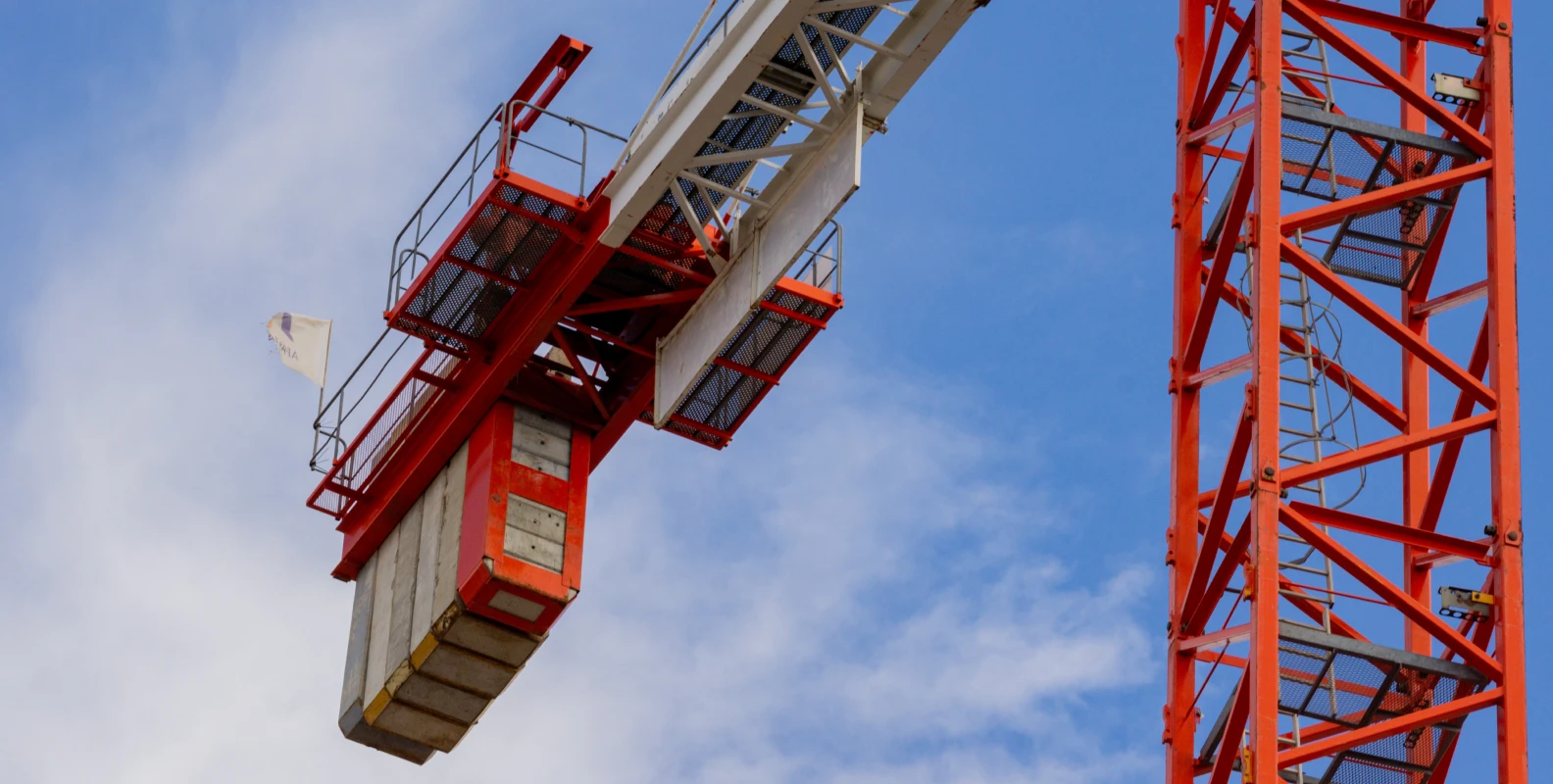
What a Placing Boom Actually Does
A placing boom is a hydraulic articulating arm with a concrete delivery pipe running through it. The boom rotates 360° on its base and the arms unfold to deliver concrete to a point up to 21-51 m away from the base (depending on model). Concrete arrives at the boom's base from a pump's riser pipe; the boom distributes it horizontally to where the crew needs it.
Why this matters: at the top of a high-rise, a single pump-pipe outlet can only deliver concrete to one point. The crew has to either drag end-hose around the floor (slow, dangerous on big pours), or use a placing boom (one operator on remote control, 28-35 m of radial reach from a fixed mounting position). Above 50 m of building height, placing booms become standard equipment.
The Six Placing Boom Types
TRUEMAX's B8 series covers all six. Each type solves a different problem:
| Type | How It Mounts | Typical Reach | Where It Wins |
| Column-climbing | On a steel mast that anchors to the building's structural columns | 27-35 m radius | High-rise typical-floor cycles, where the boom needs to step up one floor at a time |
| Formwork-climbing | On the building's jump-form or self-climbing formwork system | 21 m radius | Core walls and shear-wall structures with jump-form formwork |
| Spider (outrigger) | Stands on four extending outrigger legs on the slab | 17-21 m radius | Single-floor pours, podium decks, mid-rise where the boom relocates between floors via crane |
| Mobile wheeled | On a wheeled trolley that's towed across the slab | 17 m radius | Large slab pours where the boom moves laterally across the floor |
| Lattice tower (free-standing) | On a free-standing tower-crane-style lattice mast | 38-51 m radius | Tall pours where the boom needs maximum reach and the structure can't carry climbing loads |
| Mobile boat | On a boat or barge | 21 m radius | Over-water precast operations, marine bridge component manufacture |
Column-Climbing Placing Booms — The High-Rise Workhorse
A column-climbing boom is mounted on a vertical mast that's anchored at intervals to the building's structural columns. As the building rises, the boom self-climbs the mast one storey at a time. The climb cycle takes 30-60 minutes and is usually timed to match the typical-floor pour cycle so the boom is always one floor below the working level.
TRUEMAX builds five models in this category:
• PB28A-3R-II — 27.7 m radius, three-arm R-fold, our entry column-climbing model
• PB32A-3R-II — 31.7 m radius, three-arm R-fold, mid-range
• PB33A-4R-II — 32.4 m radius, four-arm R-fold, 30 MPa heavy-duty hydraulics for the largest pours
• PB33B-4R — 32.55 m radius, four-arm, 16-tonne lightweight version with 200° end-section fold
• PB35A — 35 m radius, our largest column-climbing boom, with 22 kW power and 16.2 m free-standing height (can operate as either column-climbing or short-mast free-standing)
Choosing within the column-climbing range comes down to building footprint. Reach must clear from the boom mast to the building's far corner. For a typical 30×30 m residential tower, a 27-32 m boom is enough. For floor plates above 35 m diagonal, the PB35A or a lattice tower is needed. We've supplied column-climbing booms to high-rise projects across the Middle East, Africa and Southeast Asia, including projects up to roughly 280 m tall.
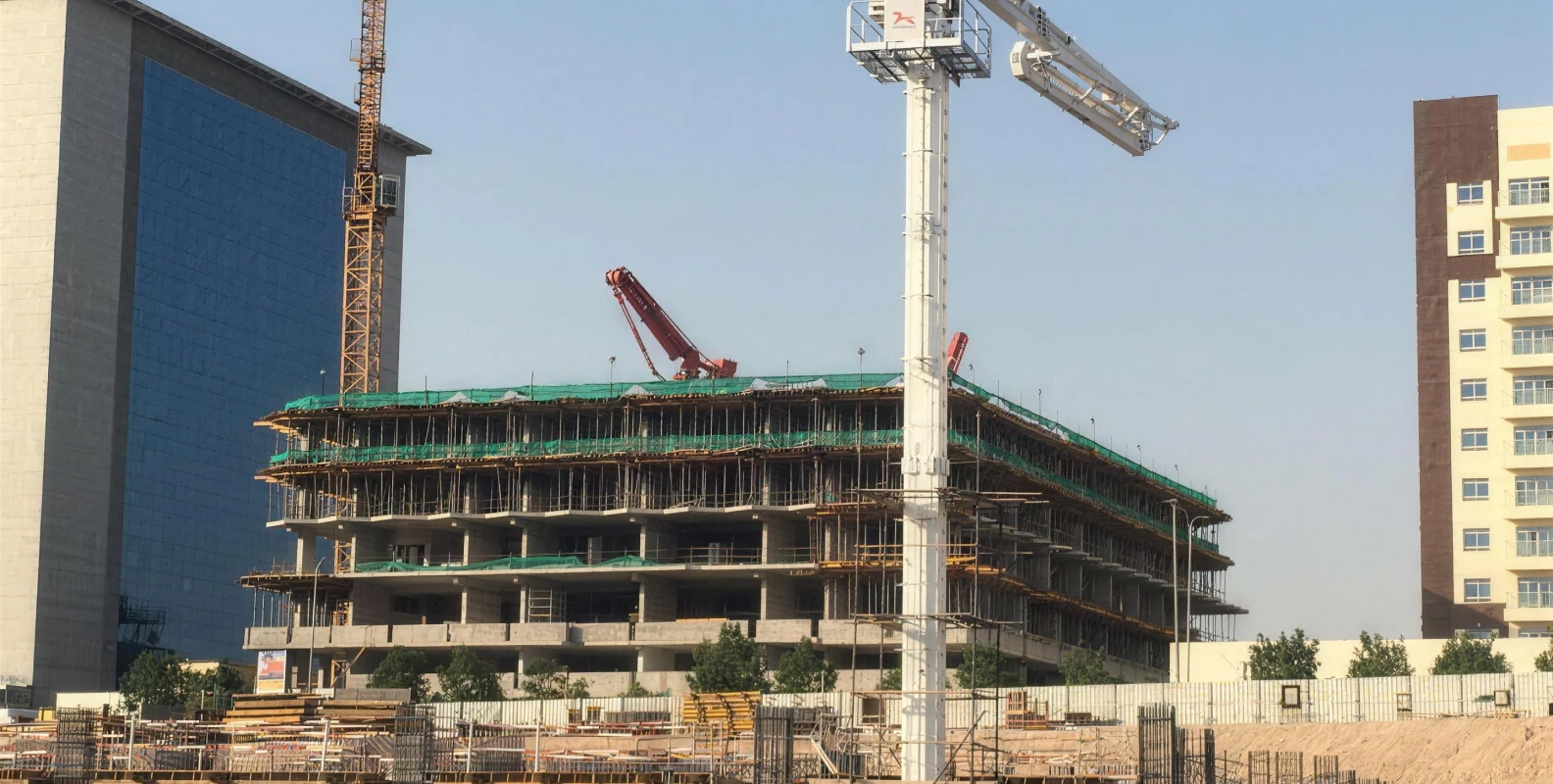
Formwork-Climbing Placing Booms — For Core Walls
Formwork-climbing booms attach to the building's jump-form or self-climbing formwork system rather than to the structural columns. As the formwork climbs, the boom climbs with it. This is the right specification for tall structures built primarily with core-wall jump-form construction — shear-wall residential towers, concrete-core office towers, communication towers.
TRUEMAX builds one model: PB21AM-3R formwork-climbing, 21 m radius. The 21 m reach is sized to the typical core-wall footprint; longer reaches don't help on a structure that's basically a vertical tube. For the same PB21AM-3R model, we also build a mobile boat version for marine precast applications — same boom, completely different mounting and use case.
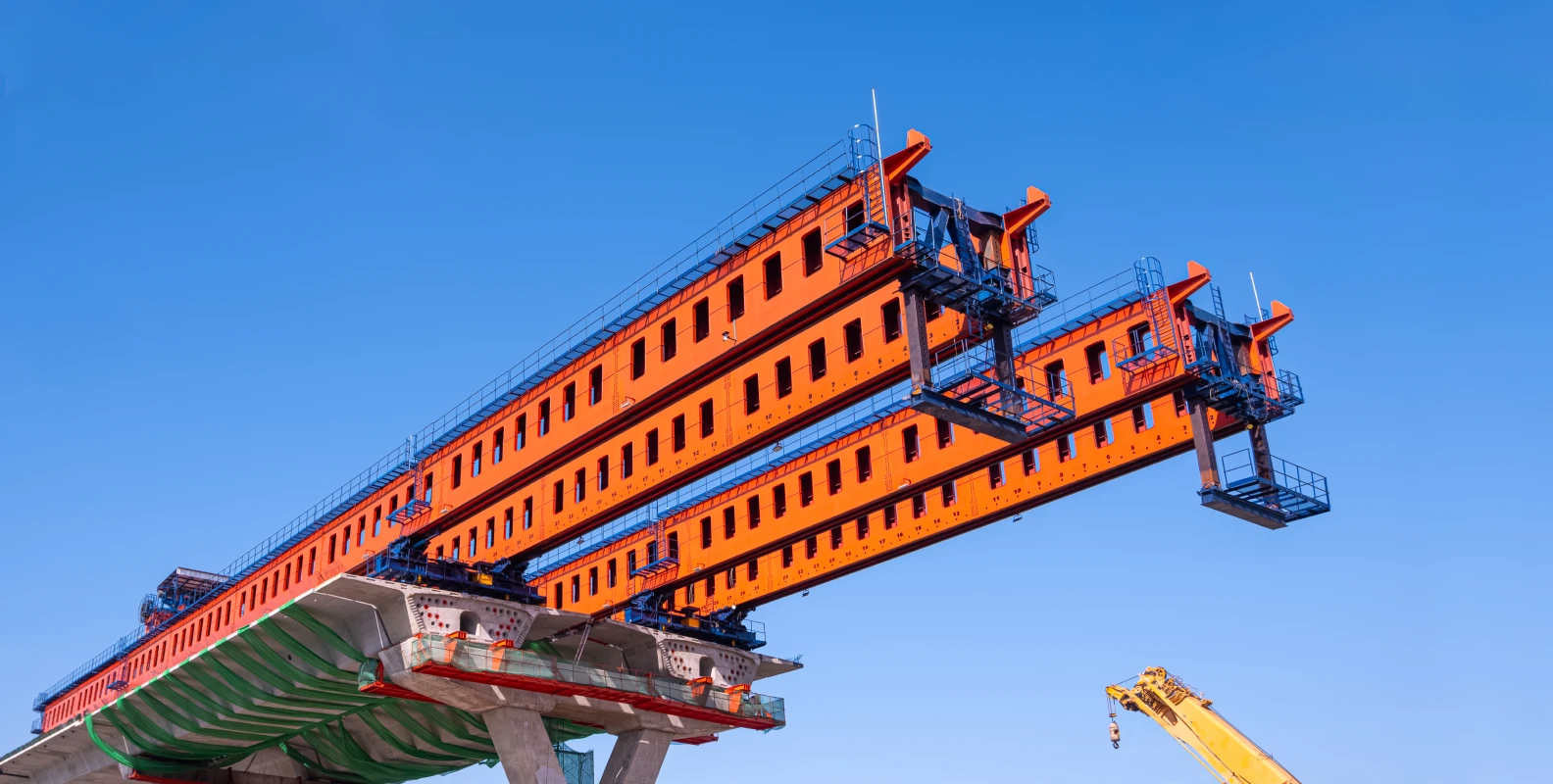
Spider Placing Booms — Single-Floor Versatility
Spider booms stand on four extending outrigger legs that brace against the slab. They don't climb — when the floor is poured out, the boom is craned to the next floor and re-deployed. This makes them the right pick for floor pours where the building isn't tall enough to justify a climbing boom, or where the structural system doesn't support column-climbing loads.
TRUEMAX builds two spider models:
• PB17B-3R-II — 17 m radius, the smaller spider, with a 1,520 kg main-lift-unit weight that makes it the lightest in the TRUEMAX range to lift with a tower crane
• PB21B-3R — 21 m radius, gear-slewing, for medium-floor pours where the larger reach is needed
Spider booms are cost-effective for mid-rise work (10-30 storeys) where a column-climbing boom is over-spec. Their downside is the crane-lift requirement between floors — you need a tower crane on site that can pick up 1,500-3,000 kg and place the boom on the next floor, and that crane has to be available when you need it.
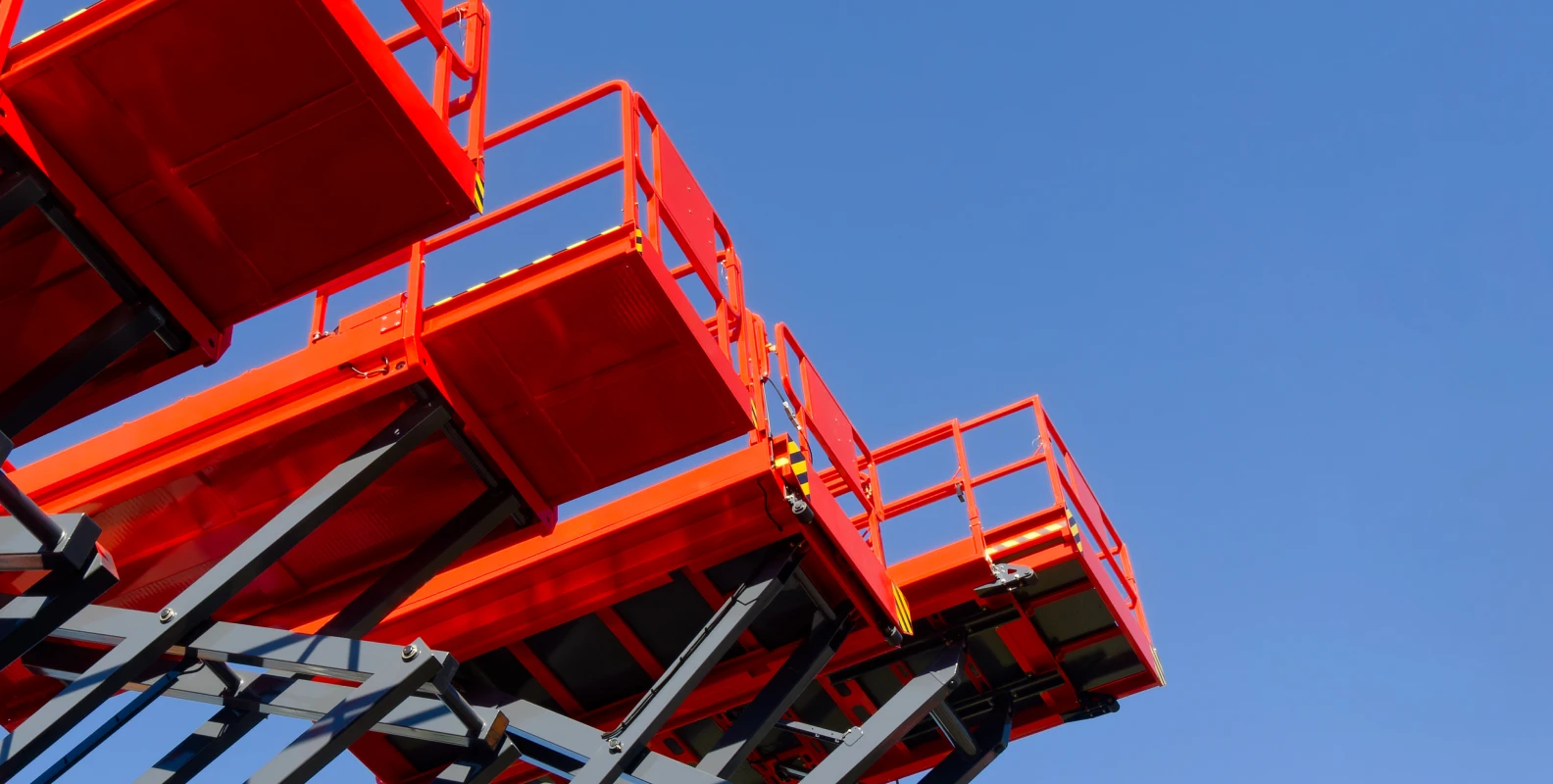
Mobile Wheeled Placing Booms — Large Slab Pours
The mobile wheeled boom (TRUEMAX PB17D-3R) sits on a wheeled trolley that can be towed across the slab without a crane lift. This is the right pick for very large floor pours — podiums, large-floor commercial buildings, parking decks — where one boom needs to cover the floor by repositioning rather than by reach alone.
It's a niche product. Most placing-boom buyers go with column-climbing or spider booms. The PB17D-3R earns its place when the floor footprint exceeds the boom's reach and the crew prefers to roll the boom rather than crane it.
Lattice Tower (Free-Standing) Placing Booms — Maximum Reach
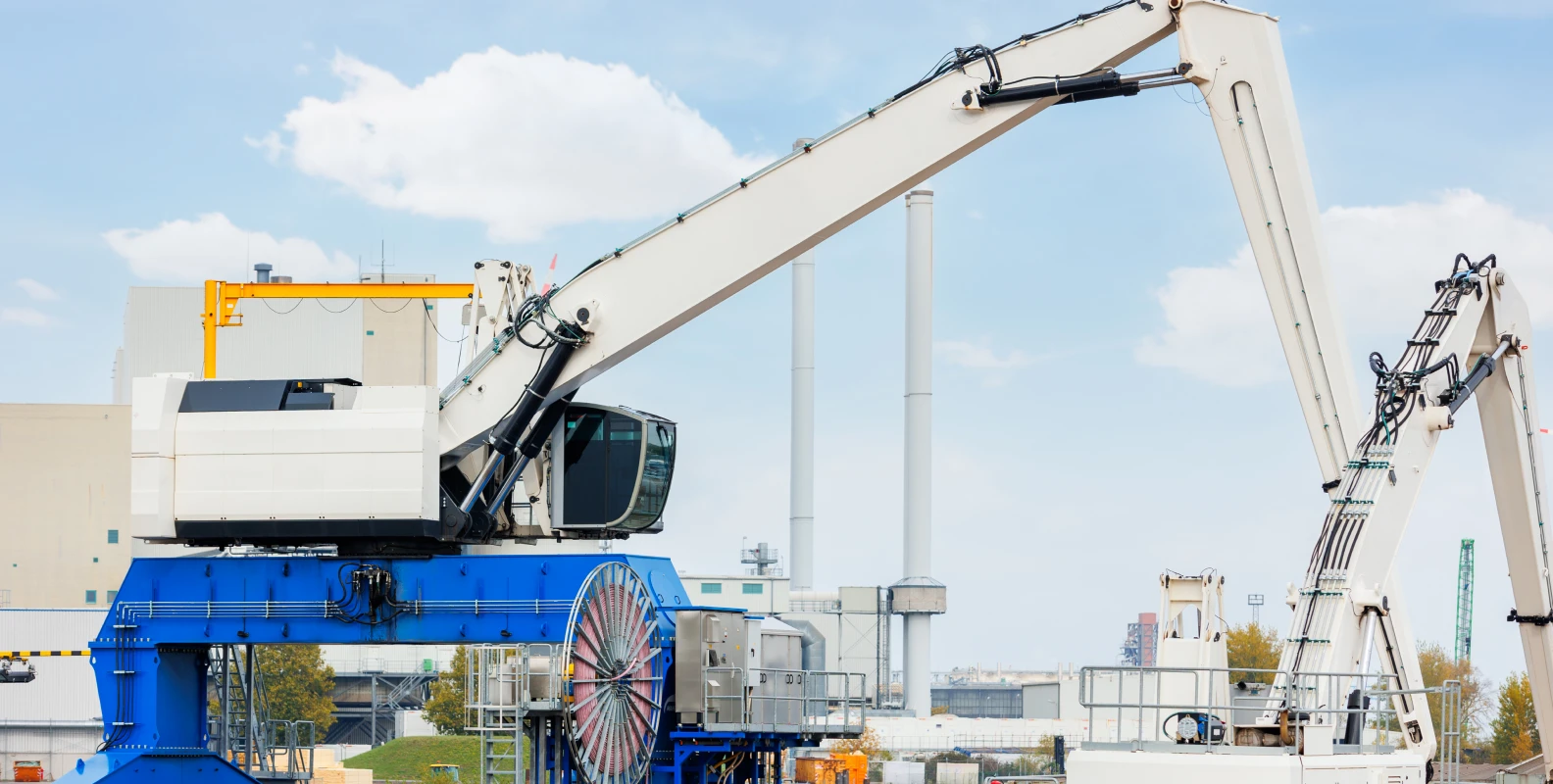
Lattice tower booms stand on a tower-crane-style lattice mast that's free-standing — anchored to a concrete foundation, not to the building. This means the boom doesn't depend on the building structure to climb, and it can reach further than column-climbing booms because the lattice mast carries more lateral load.
TRUEMAX builds two models:
• PB38BT-4R-E — 38 m radius, four-arm, 40 m free-standing height
• PB51AT-4R-E — 51 m radius, four-arm, 46 m free-standing height, with a 2×2 m heavy-duty mast section — the largest placing boom in the TRUEMAX range
These are specified for projects where the building can't carry column-climbing loads, where the floor plate is too large for a 35 m boom to cover, or where the construction sequence places the boom adjacent to (not on) the structure being built. The PB51AT-4R-E in particular is what gets specified for the largest commercial pours and for podium-on-podium construction.
Mobile Boat Placing Booms — Over-Water Operations
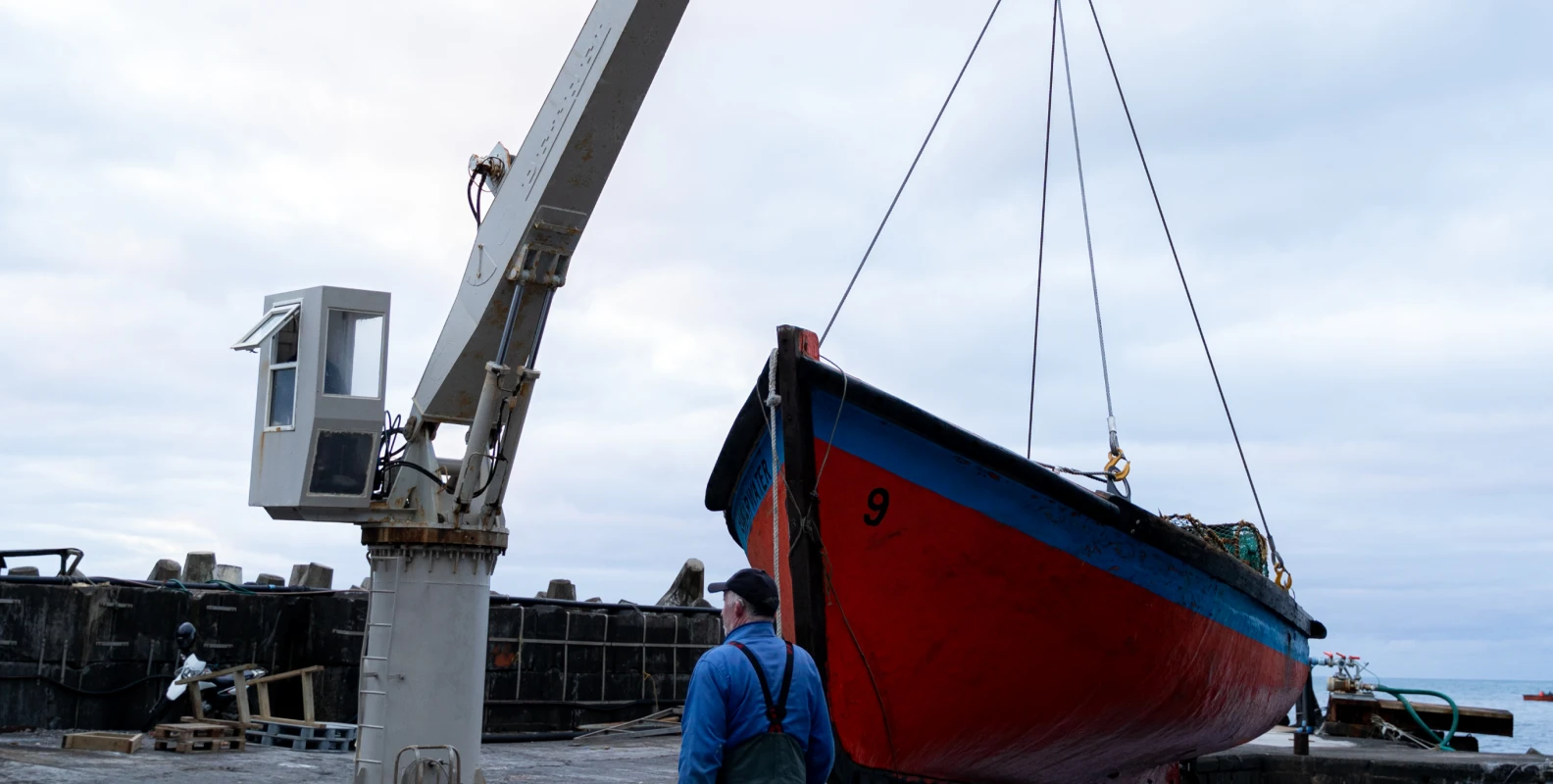
The mobile boat boom (PB21AM-3R, same model number as the formwork-climbing version but a different supplied configuration) is mounted on a boat or barge. Used for: over-water precast bridge component manufacture, river-crossing pour operations, marine concrete delivery.
Real niche product, real use. We've supplied it for marine bridge programmes where precast bridge components are cast on a vessel close to where they'll be installed, eliminating the long over-land transport.
Sizing a Placing Boom to Your Job
Three questions decide the model:
1. What's the building footprint or floor plate to be covered? Boom radius must reach from the mounting point to the far corner. Add 1-2 m margin for safe operation. A 30 m × 30 m footprint needs roughly 32 m diagonal reach minimum.
2. How does the boom climb (or move) with the building? Column-climbing for typical-floor high-rise cycles. Formwork-climbing for jump-form core walls. Spider for mid-rise where the boom relocates between floors. Lattice tower for irregular structures or maximum reach.
3. What's the structural carrying capacity of the building (for climbing booms)? Column-climbing booms apply loads to the building's columns at each anchor point. The structural engineer needs to verify the loads against the column capacity at each anchor level. Our team supplies the load tables on enquiry.
Frequently Asked Questions
How is a placing boom different from a concrete pump?
Different jobs. The pump pushes concrete from the batching plant up through a pipe to wherever it needs to go — vertical delivery. The placing boom takes the concrete from the end of the pump pipeline and distributes it across the working area — horizontal placement. Both work together. A high-rise pour uses a stationary pump at ground level (or low level) pushing concrete up a riser pipe to a placing boom on the working floor, which distributes it across the slab.
What height does a placing boom typically operate at?
Column-climbing booms operate at whatever height the building has reached — the boom climbs one floor at a time as the building rises. The PB35A has been used on buildings up to 280 m. Lattice tower booms operate at their free-standing height (40-46 m for TRUEMAX models) or higher when tied into adjacent structure. Spider booms operate at whatever floor they're craned to.
How is the boom fed concrete?
Through a riser pipe — typically 125 mm steel pipeline anchored to the building or to the boom's mast. A pump on the ground (or on a lower floor) pushes concrete up the riser to the boom's inlet, and the boom distributes from there. The pump and the placing boom are matched in pressure rating — there's no point pumping at 23 MPa to a boom rated for 18 MPa.
Why do some placing booms have three arms and others have four?
Four-arm booms reach farther — the extra arm adds horizontal reach and the ability to fold tighter around obstacles. Three-arm booms are lighter and simpler. For reaches up to about 32 m, three arms cover it. Above 33 m, four arms become standard. TRUEMAX builds both: the PB28A and PB32A are three-arm (3R designation), the PB33A, PB33B, PB35A and lattice tower models are four-arm (4R).
How fast does a placing boom climb on a typical-floor cycle?
The climb itself takes 30-60 minutes including securing the anchorage at the new level. This is normally scheduled into the floor cycle — pour the floor in the morning, climb the boom in the afternoon, set up for the next floor. A 5-day floor cycle has the boom in pouring position for 4 days and climbing for 1 day on average.
Can the same placing boom work on multiple buildings, or is it dedicated to one project?
Multi-project use is the norm. Column-climbing and lattice tower booms move from one project to the next over service lives of 10-15+ years. Mast sections, anchor brackets and base foundation requirements need to be configured for each project, but the boom itself is reused. We'll supply the project-specific brackets and provide the boom configuration help on each redeployment.
-

TrueMax
Concrete & Construction Equipment ManufacturerEstablished in 2003, Truemax designs, manufactures, and delivers concrete pumping equipment, crushing machinery, and construction hoisting systems from our own factory in Haining, China to jobsites in over 120 countries.


