

Highway, rail, bridge and tunnel work asks different questions of concrete equipment than building work does. The pour is long and linear instead of vertical. The site moves with the alignment. Aggregate has to follow the work. And the concrete itself is often high-grade structural — bridge piers, tunnel linings, pavement, viaducts — that won't tolerate batching errors.
TRUEMAX equipment has been on Qatar Rail Metro, Mexico City International Airport, Wuhu Bridge, Pingtan Bridge and dozens of regional infrastructure programmes. This page covers what an infrastructure-and-bridge concrete package looks like, what to specify by structure type, and how the TRUEMAX range maps to each.
What Infrastructure Concrete Equipment Has to Do
Civil engineering is concrete-intensive work, and the equipment that supplies it has three jobs that building-site equipment doesn't:
First, it has to keep up with paving and lining rates. A highway base paver lays around 200-300 t/h. A bridge deck pour can take 1,000 m³ in one continuous shift. A tunnel boring machine waits on segmental lining concrete arriving at the rate of TBM advance. None of these tolerate batching plants that stop.
Second, the supply chain is mobile. Highway and rail projects advance along an alignment. A plant set up at Station 0+000 is 50 km from Station 50+000 by the end of year two. Either the plant moves with the work, or the haul distance kills your concrete spec.
Third, the concrete is often two products at once. The same project may need C50 structural concrete for bridge piers AND lean-mix cement-treated base (CTB) for pavement subbase. These come from different plant types — a concrete batching plant and a stabilised soil mixing plant — and operators that try to make one plant do both lose precision on the structural side.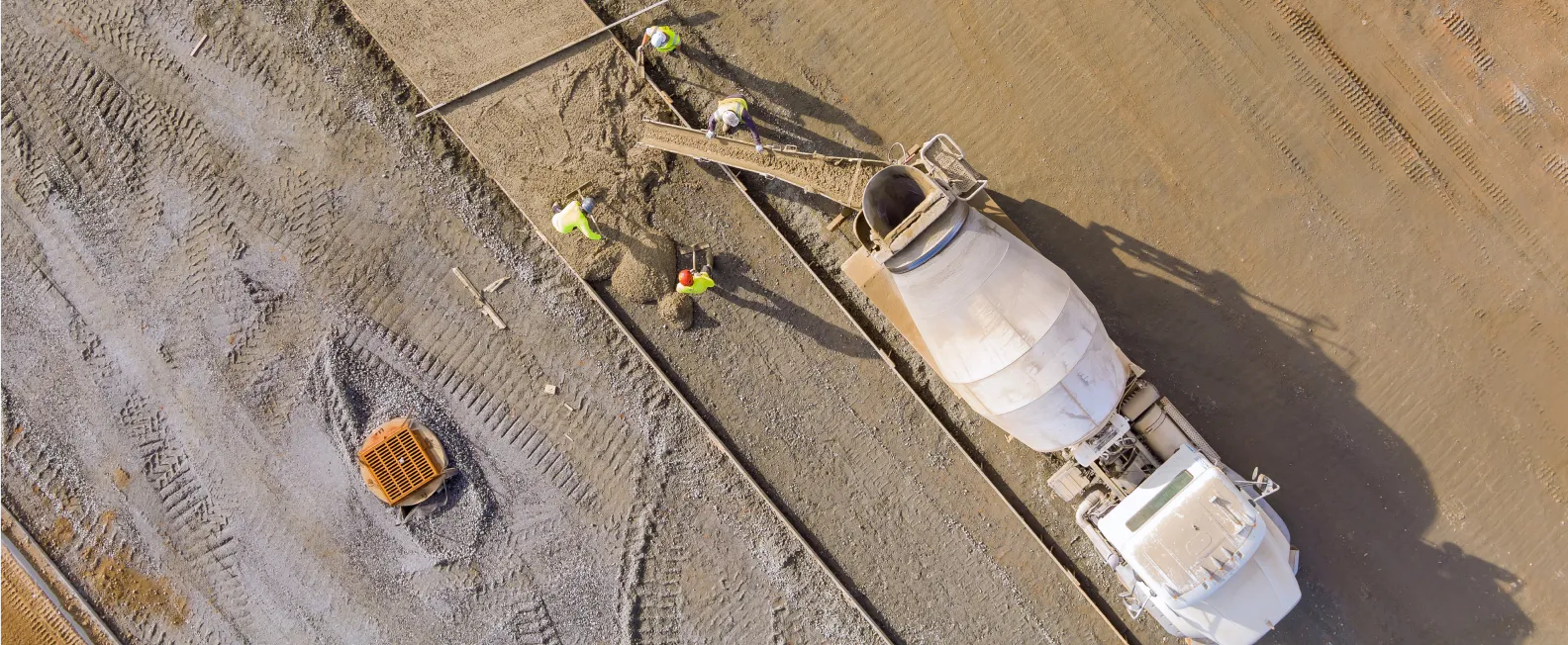
The TRUEMAX Infrastructure Equipment Package
Built from real product lines, the typical infrastructure-and-bridge package looks like this:
| Application | Equipment Pick | TRUEMAX Model |
| Bridge pier, abutment, deck concrete | Stationary or truck-mounted boom pump + batching plant | SP series stationary pumps or TP boom pumps + CBP120S/180S |
| Tunnel lining segment (precast) | Modular batching plant + placing boom | CBP180C / CBP240C modular + PB21AM-3R formwork or boat-mounted |
| Cast-in-place tunnel lining | Truck-mounted line pump + horizontal placing booms | LP100.18.253D or LP100.23.360D line pumps |
| Highway pavement (concrete pavement) | Mobile batching plant + truck mixers | CBP60M / CBP100M mobile plants + CTM8-CTM12 mixers |
| Highway base course (CTB) | Stabilised soil mixing plant + dump trucks | SMP800G (800 t/h) or SMP1000G (1,000 t/h) |
| Truck mixer fleet for all of the above | 6-14 m³ drum mixers on heavy-duty chassis | CTM6 to CTM14 on SINOTRUK 6×4 or 8×4 chassis |
Mobile and modular plants because the work moves
Highway and rail projects rarely run from a single fixed plant. On a 80 km highway, we typically specify two or three batching plants that leapfrog along the alignment — one plant runs for the year that the work is within haul distance, then dismantles and moves forward 30 km. TRUEMAX modular CBP180C and CBP240C plants are built for exactly this: container-design erection in roughly three hours, dismantling for transport at project end, and the same 180-240 m³/h output as the equivalent stationary plant.
On smaller regional contracts the CBP60M or CBP100M mobile plants — towable, with folding belt conveyor — are sized to follow the work without the modular plant's footprint.
Stabilised soil for pavement base, not concrete
One thing infrastructure buyers regularly get wrong: a concrete batching plant is the wrong machine for cement-treated base (CTB), lime-stabilised soil, and similar road-base courses. Concrete is mixed in batches at 60-second cycles with high binder content (12-15% cement). Stabilised soil is mixed continuously at hundreds of tonnes per hour with low binder (3-6% cement or lime). The plants are different equipment families.
TRUEMAX's SMP800G and SMP1000G stabilised soil mixing plants produce 800 and 1,000 t/h respectively, using continuous mixing with VFD-controlled aggregate feed and 5-6 aggregate bins. On a highway with 30 km of CTB, an SMP1000G feeds a full-width paver continuously, where trying to do the same with a concrete batching plant means constant stop-start and broken mix continuity.
Boom pumps and line pumps for bridge work
Bridge pours look like building work but have one structural difference — the pump has to reach over the river or terrain, not just up. A truck-mounted boom pump (TRUEMAX TP25M4 25 m or TP38RZ5 38 m) handles small to medium bridge work where the pump can park at the abutment. For longer reaches or river crossings where the pump can't get close, a truck-mounted line pump (LP100.18.253D, LP100.23.360D) with pipework run along the bridge deck is the standard answer.
On the Wuhu Bridge and Pingtan Bridge projects we supplied a combination: stationary pumps at the pier locations for vertical pour, and line pumps for the deck slab once the superstructure was in place.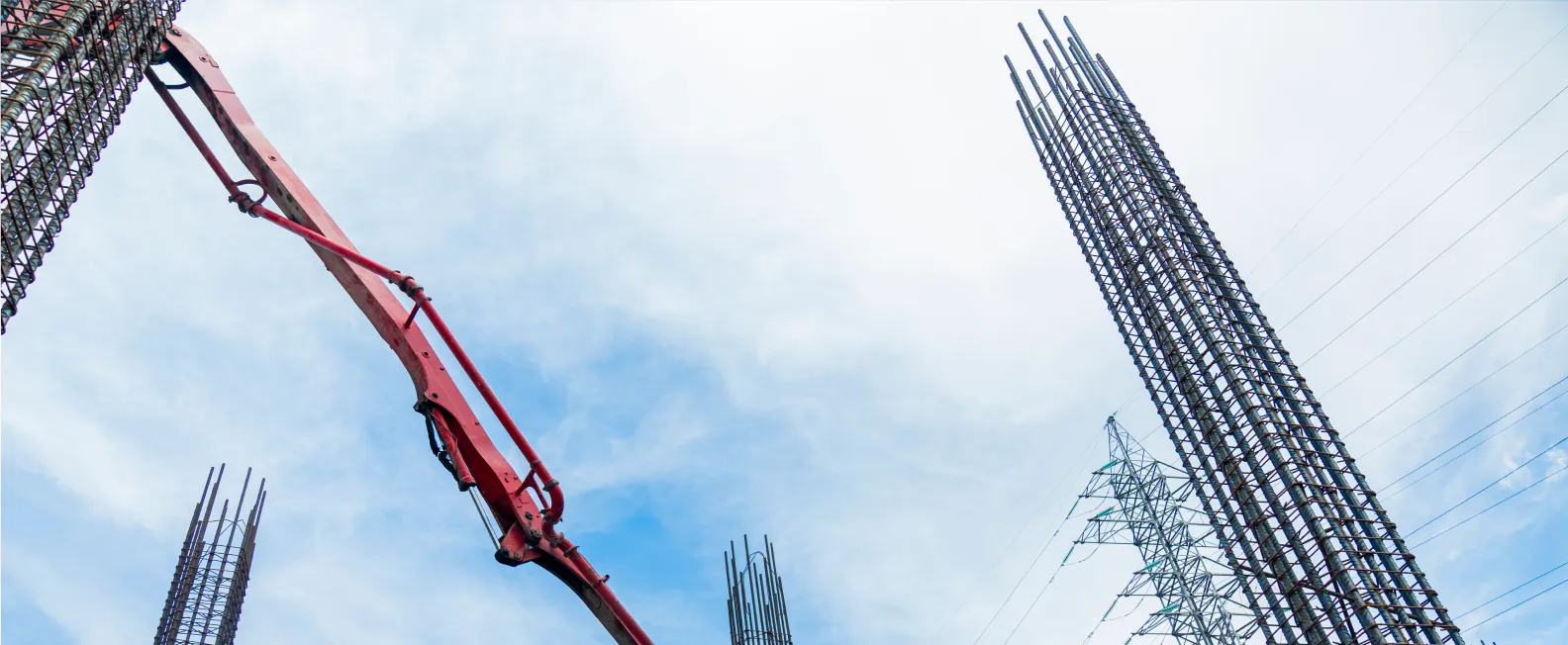
Proven on Major Infrastructure Projects
Real TRUEMAX deployments on infrastructure programmes include:
• Qatar Rail Metro Project (Doha) — 60+ sets of heavy equipment plus 7,000 tons of tunnel steel structures, meeting UK and Qatar dual standards
• Mexico City International Airport — concrete equipment for runway and apron base, pavement, and structural concrete
• Wuhu Bridge (China) — pumping and batching equipment for cable-stayed bridge piers and deck
• Pingtan Bridge (China) — equipment for long-span sea-crossing bridge with marine concrete delivery
• Multiple highway upgrade programmes in the Middle East and Africa with mobile and modular plants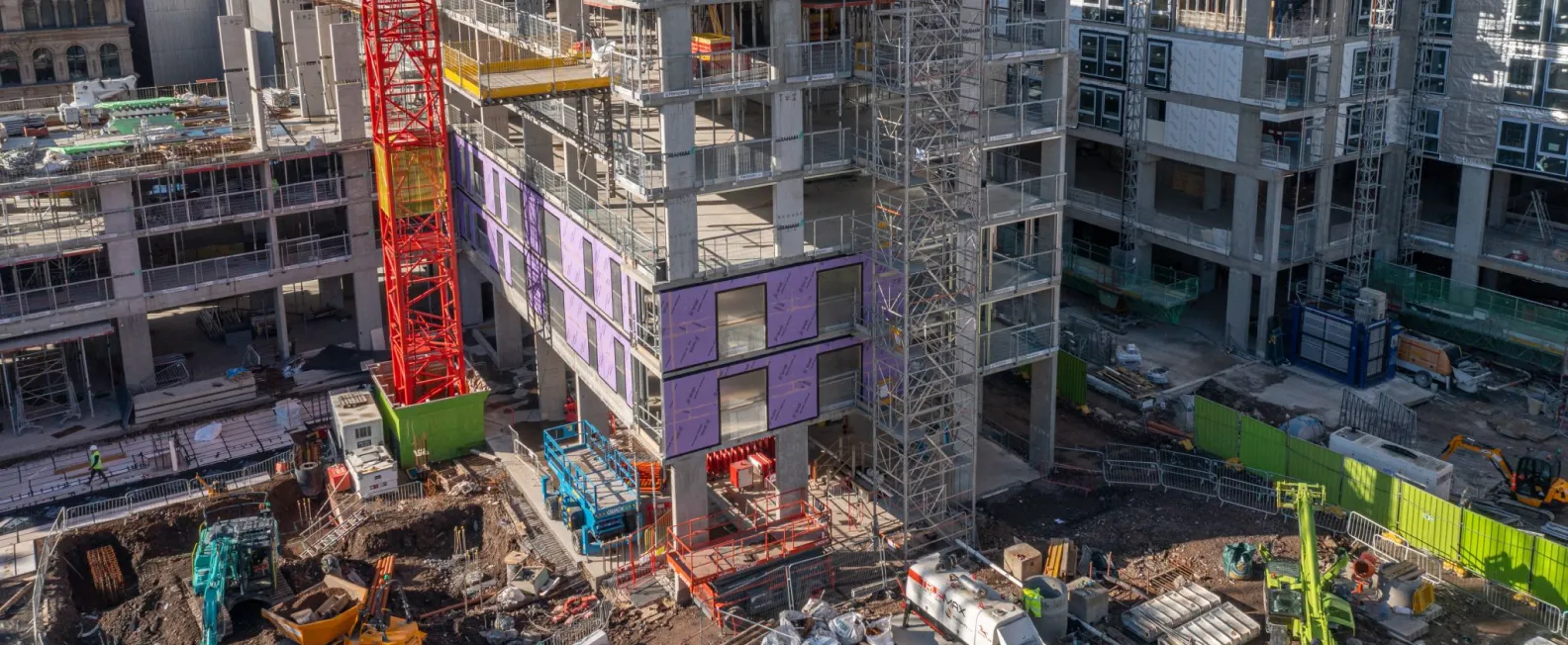
Specifying Infrastructure Concrete Equipment
Three questions decide the equipment list:
1. What does the alignment look like? A linear project of more than ~30 km usually needs multiple plant locations or a modular plant that moves. A point project (single bridge, single interchange) sustains from one location.
2. What's the concrete mix programme? Pure structural concrete = batching plant. Mixed structural + base course = batching plant AND stabilised soil plant. Mostly base course = stabilised soil plant primary, smaller batching plant for structural pours.
3. What's the regulatory environment? Euro V emissions and 22.5" tubeless tyres for European, Australian and developed-market projects (TRUEMAX SINOTRUK-HOWO N7 chassis). Euro II-V flexibility for emerging-market projects (SINOTRUK mainstream chassis).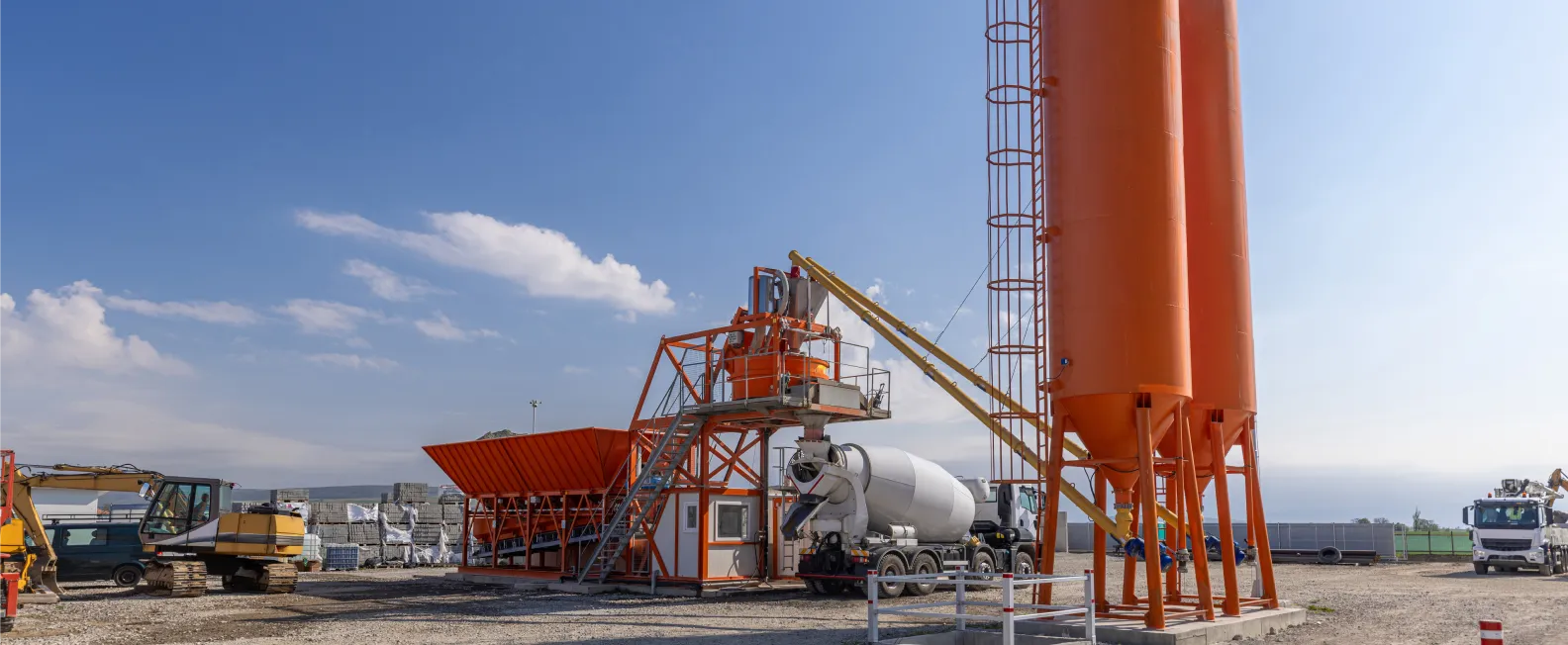
Frequently Asked Questions
How do I know if I need a stabilised soil plant in addition to a concrete batching plant?
If your project includes cement-treated base (CTB), lime-stabilised soil, or any pavement base course built with low-binder mixes, you need a stabilised soil mixing plant. A concrete batching plant cannot produce these economically — the mixing geometry, cycle time and binder ratio are all wrong for it. As a rule of thumb: every 100,000 m² of highway pavement needs about 1 stabilised soil plant of 800-1,000 t/h running for the base-course phase, separate from the batching plant doing structural concrete.
Can a TRUEMAX modular plant really be set up in 3 hours?
Three hours for the main plant erection, yes — that's the structural set-up of the container-design modules into operating position. Full commissioning to first concrete takes longer (typically 7-14 days including silo installation, electrical connection, water supply, control system calibration and trial batches). The three-hour figure is what makes the CBP180C / CBP240C the right plant for time-limited infrastructure projects — the structural set-up doesn't slow your schedule.
What concrete mix should I plan for bridge pier pours?
Bridge piers typically use C40-C60 high-strength structural concrete with mid-range slump (120-180 mm) for pumpability. Cement content is 380-450 kg/m³ with fly ash or slag SCM partial replacement (15-30%). For marine bridge environments add corrosion-protective admixtures and aim for low water-binder ratio (0.32-0.38) for durability. TRUEMAX's CBP120S and CBP180S plants are sized to produce these mixes accurately with the JS2000/JS3000 twin-shaft mixers and electro-mechanical weighing systems.
How does TRUEMAX support an infrastructure project that runs across multiple countries?
We have local service offices in Dubai, Saudi Arabia, Ethiopia, Djibouti, Nigeria, Indonesia, Malaysia and India. For projects in the Middle East, Africa and Southeast Asia these offices provide spare parts inventory, operator training, on-site mechanics and warranty service. For projects outside our office network we send service teams from China through scheduled visits, with remote diagnostic support via our intelligent monitoring system between visits.
Will the equipment work for both structural concrete and pavement?
Yes, with separate plants for each. A concrete batching plant for structural mixes and a stabilised soil mixing plant for pavement base is the right architecture for any major highway or rail project. Sharing one plant across both applications creates mix-design conflicts and slows the project. The capital cost of two specialised plants is paid back in production efficiency within months on a large infrastructure programme.
What about mobile concrete batching plants for remote infrastructure sites?
The CBP60M (60 m³/h) and CBP100M (100 m³/h) are towable, trailer-mounted plants designed for sites where transport access is the constraint — remote roads, mountain passes, distant rail alignments. They share the same JS1000 / JS2000 mixer and accuracy class as the stationary equivalents. Trade-off: lower output ceiling (100 m³/h max) and a 72-second mixing cycle on the CBP100M versus 60 seconds on a stationary plant. For projects up to about 70 m³/h sustained demand, a mobile plant covers it.
-

TrueMax
Concrete & Construction Equipment ManufacturerEstablished in 2003, Truemax designs, manufactures, and delivers concrete pumping equipment, crushing machinery, and construction hoisting systems from our own factory in Haining, China to jobsites in over 120 countries.


