

Precast concrete is concrete that's manufactured, not poured in place. The factory makes bridge beams, tunnel lining segments, façade panels, hollow-core slabs, paving blocks — anything where casting in a controlled environment beats casting on the building site. The advantages are well-documented: better dimensional tolerance, faster site programme, fewer weather delays. The catch is that the precast factory has to actually work — and most of that work is the concrete supply.
TRUEMAX supplies precast factory equipment for bridge-beam yards, segment factories, paving-block plants and general precast operations. This page covers what a precast factory's concrete supply has to do differently, what equipment configuration we recommend by product type, and where the TRUEMAX modular and stationary plants, placing booms and truck mixers fit into the factory layout.
How Precast Concrete Supply Differs from Ready-Mix
Most concrete plants supply ready-mix concrete to outside customers. A precast plant supplies concrete to itself — into moulds that are inside the same factory, often within 50-100 metres of the mixer. That short trip changes three things:
Mix design is tighter. A precast bridge beam is moulded once and used for 50-100 years. A 2% batching error on aggregate proportions matters here in a way it doesn't for cast-in-place foundation concrete that the structural engineer designed conservatively.
Concrete temperature, slump and setting time are tuned to mould cycles, not delivery distance. Self-consolidating concrete (SCC) and steam-cured mixes are routine in precast and rare in ready-mix. The plant has to support these mix designs as a normal product, not an exception.
Delivery system is internal, not by truck. Concrete moves from mixer to mould by flying-bucket overhead conveyor, by placing boom over the casting bed, or by short-haul truck mixer if the factory layout requires it. The equipment package looks more like a production line than a delivery operation.
The TRUEMAX Precast Factory Equipment Package
| Factory Function | TRUEMAX Equipment | Notes |
| Concrete production (core) | CBP180C / CBP240C modular plant | Container-design erects fast, dismantles when the project precast runs out |
| Concrete distribution over casting beds | PB21AM-3R formwork-mounted placing boom | Mounted on the precast casting bed structure |
| Concrete distribution for over-water precast | PB21AM-3R mobile boat placing boom | Boat-mounted for over-river precast bridge component production |
| High-precision batching for SCC and steam-cured mixes | CBP120S / CBP180S stationary plant | JS2000 / JS3000 twin-shaft for tight homogeneity |
| Internal short-haul transport | CTM3 to CTM8 truck mixers (3-8 m³) | Smaller drums sized to internal factory haul distances |
Modular vs stationary plants in precast
Precast factories are often built for a specific project or programme. A tunnel-lining segment factory for a metro project runs for 3-5 years, then dismantles. A bridge-beam yard supports a highway programme then closes. For these project-led precast factories, TRUEMAX modular plants (CBP180C, CBP240C) are typically the right choice — the container-design erection and dismantling means the plant follows the project life rather than becoming a stranded asset.
Permanent precast operations — independent yards making paving blocks, façade panels, hollow-core slabs to multiple customers over a decade-plus operating life — usually justify a stationary plant (CBP120S, CBP180S, CBP240S) for the lower lifetime cost and the easier integration with permanent silo and aggregate storage.
Placing booms inside a precast factory
The PB21AM-3R placing boom comes in two configurations that TRUEMAX builds specifically for precast applications: formwork-mounted (the boom sits on the casting bed's formwork structure and follows the mould line) and mobile boat (the boom is mounted on a vessel for over-water precast component production — a niche product with real use in marine bridge component manufacturing).
Both are 21 m radius, three-section R-fold booms. The formwork-mounted version moves with the casting cycle as moulds are stripped and reset. The boat version travels along a river to over-river precast operations where bridge components are cast on the water close to where they're needed.
Concrete mix considerations for precast
Self-consolidating concrete (SCC), used in segments where vibrating consolidation is impractical (tunnel lining segments with complex steel cages, intricate façade panels), needs precise water-binder ratio (0.30-0.38) and high-range water reducer. This is well within the ±1% accuracy of the TRUEMAX twin-shaft batching plants. We've supplied SCC-capable CBP180C plants to tunnel segment factories that meet ITA-AITES (International Tunnelling Association) precast quality standards.
Steam-cured mixes for accelerated mould cycling need consistent batch temperature and consistent batch volume — also within twin-shaft batching plant tolerance. The mix-design and temperature-control side of this is part of what TRUEMAX engineers support during commissioning rather than something the operator has to figure out.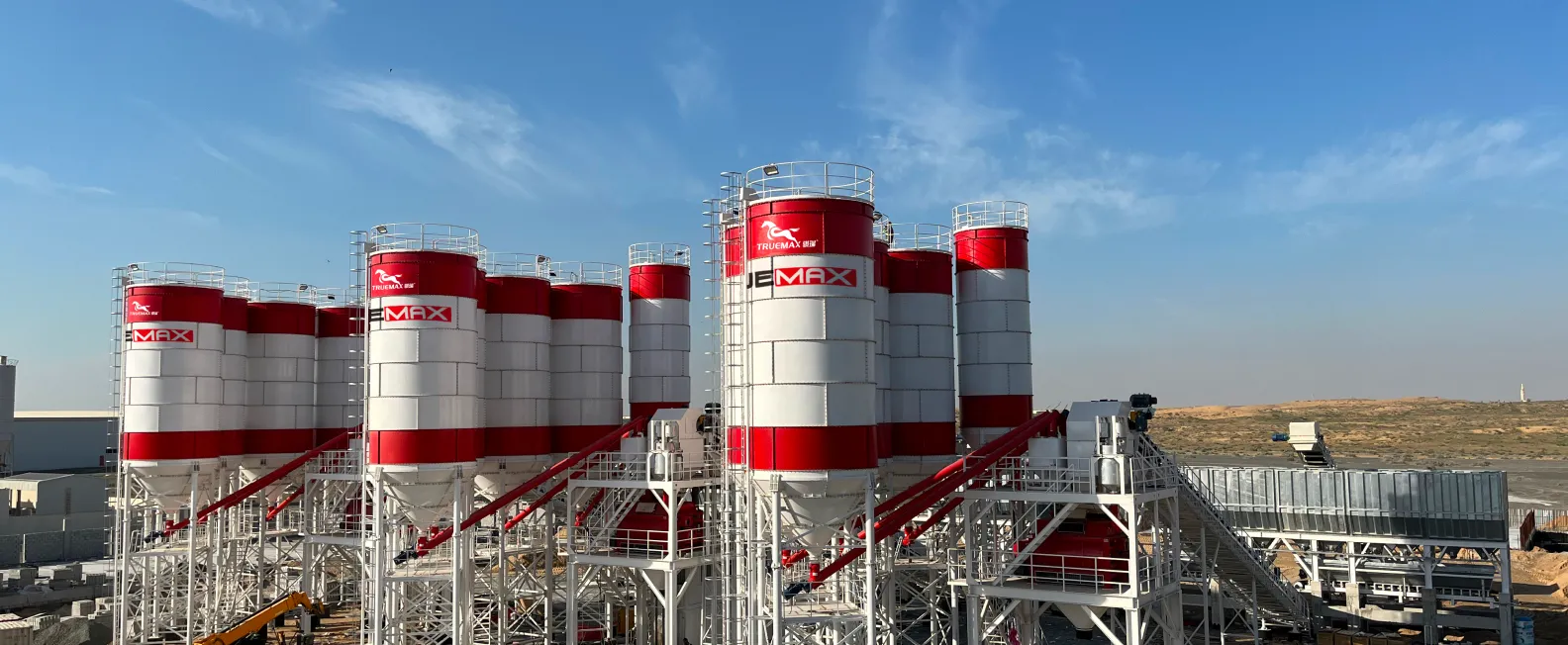
What a Precast Factory Layout Looks Like
Concrete supply typically occupies one corner of a precast factory; the rest is reinforcement preparation, mould storage, casting beds, curing area and finished-product storage. A linear flow keeps element-handling distance short:
1. Aggregate stockpiles fed by wheel loader into the batching plant ground hopper
2. Cement and admixture silos adjacent to the plant
3. Twin-shaft mixer at the centre of the plant — produces concrete in 60-second batches
4. Concrete distributed by placing boom over casting beds, OR by internal truck mixer to remote moulds, OR by flying-bucket overhead conveyor for fully-automated factories
5. Casting beds — mould fill, vibrate (or self-consolidate), strip, clean, prepare for next cast
6. Curing area — steam-cured mixes go to a curing chamber; standard mixes air-cure in place
7. Finished-product yard for inspection, storage and shipment
TRUEMAX supplies the concrete supply equipment in this list — items 1 through 4. Mould design and reinforcement systems are typically sourced from specialist suppliers in those categories. For full factory layout planning we work with our customers' precast technology consultants.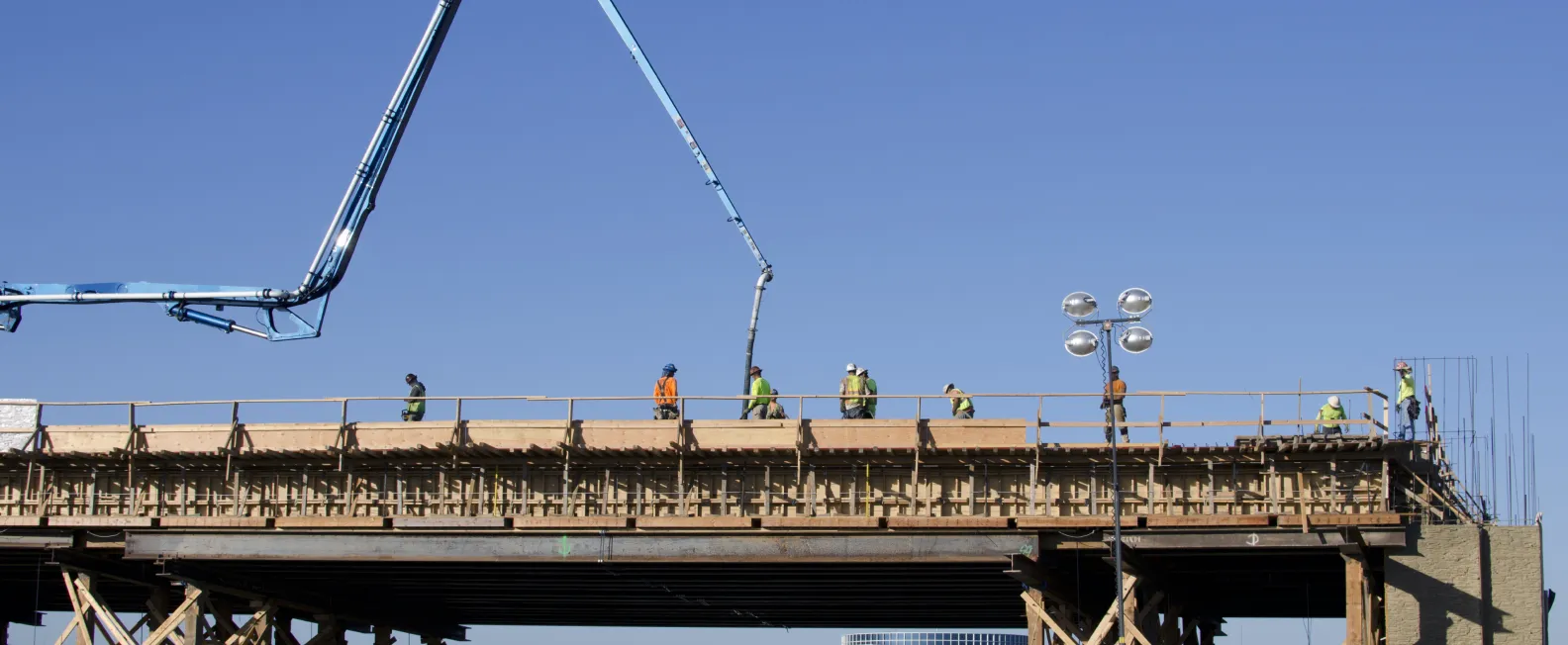
Precast Projects We've Equipped
Our precast factory equipment has supplied:
• Tunnel-lining segment factories on major metro projects across the Middle East and Asia
• Bridge-beam precast yards for highway and rail bridge programmes
• Façade panel factories for high-rise façade systems
• Paving-block plants for urban infrastructure programmes
• Modular building component factories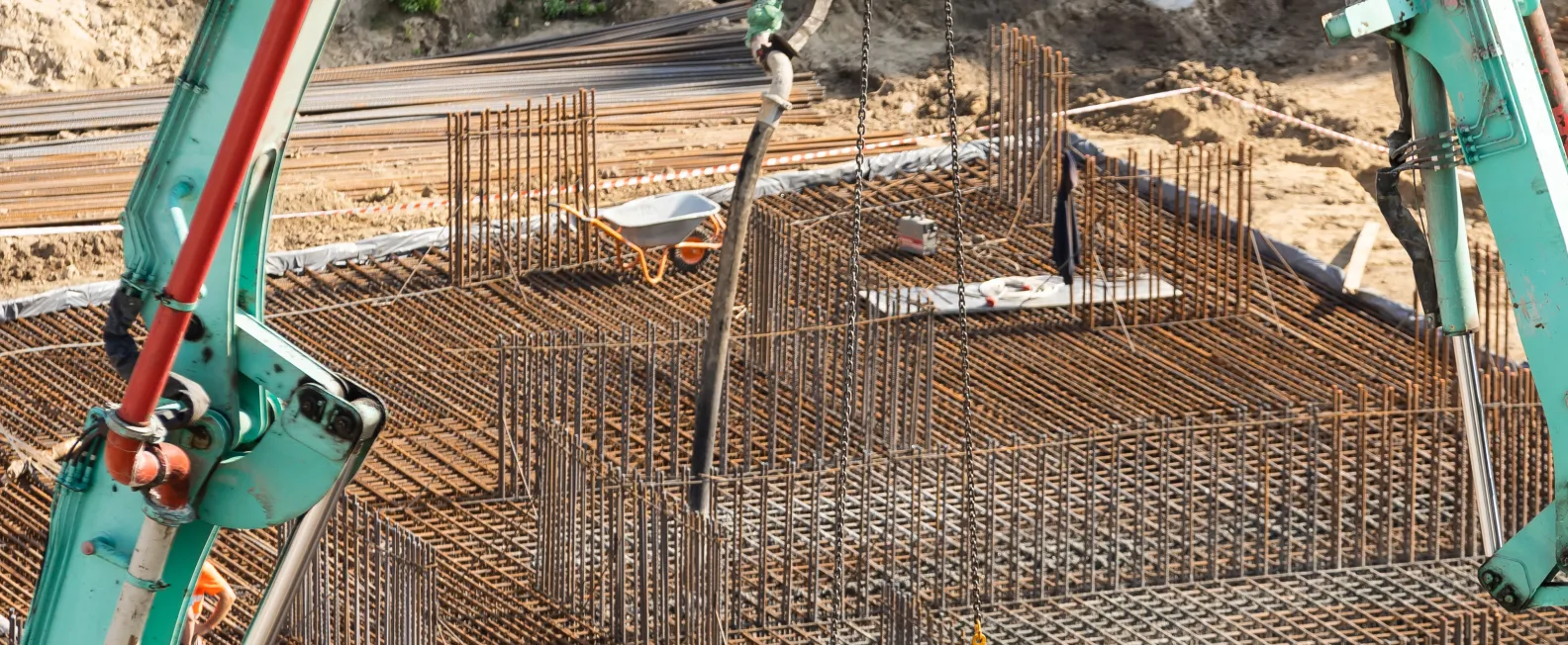
Frequently Asked Questions
Do I need a different batching plant for precast versus ready-mix?
Often, yes — but the difference is in the configuration, not in the plant type. Both ready-mix and precast use twin-shaft batching plants. The differences are: precast plants usually have tighter weighing tolerance specifications (±0.5% for cement on premium-grade precast versus ±1% standard), more silos for SCM and admixture variety, and discharge geometry matched to the factory's distribution system (overhead conveyor, placing boom, or short-haul mixer). TRUEMAX configures the CBP120S/180S/180C/240C to precast spec when the application requires it.
What's the typical output of a precast factory's batching plant?
Most precast factories run a 120-180 m³/h plant. Bridge-beam yards for major projects often use 180-240 m³/h. Paving-block plants run at the lower end (60-120 m³/h). The plant sizing comes from the factory's daily concrete demand divided by useful operating hours per day. For example, 200 m³/day across a 14-hour shift = about 14 m³/h sustained, which a CBP60S handles comfortably. A larger bridge-beam yard producing 1,500 m³/day needs the CBP180S running at ~110 m³/h sustained.
Why is the modular CBP180C suited to precast?
Precast factories often have project-led life cycles — a tunnel segment factory for a metro project runs while the metro is being built, then dismantles. The modular plant's container-design construction means the plant erects fast at the start of the project (about 3 hours for main plant erection) and dismantles for transport at the end, instead of becoming a stranded asset. For a 3-5 year precast operation, the modular plant typically wins on total project cost.
Can the same plant produce both standard concrete and SCC?
Yes. SCC differs from standard concrete in mix design — more powder content, more admixture, higher slump (650-750 mm flow) — but uses the same plant equipment. The TRUEMAX twin-shaft mixers handle both mixes; the operator switches recipes in the control system. The plant must have a high-range water reducer admixture line plumbed in, which is standard on CBP120S and larger but optional on the smaller CBP60S.
How does the mobile boat placing boom work?
The PB21AM-3R mobile boat is a 21 m placing boom mounted on a boat or barge. It's used for over-water precast operations — for example, casting precast bridge components on a vessel close to where they'll be installed on a sea-crossing or river-crossing bridge. The boat moves to the casting location, anchors, and the boom distributes concrete from a barge-mounted batching plant to the casting bed on the vessel. It's a niche product with real applications on marine bridge programmes.
What about quality control for precast concrete?
Quality control happens at three points: at the mixer (slump, flow, temperature on every batch), at the casting bed (compaction, mould condition, reinforcement position), and after curing (compressive strength on test cubes/cylinders sampled per batch). TRUEMAX plants integrate with batch-record systems that timestamp every batch and link the concrete sample to the actual element cast — so a 5-year-old bridge beam can be traced back to its original mix design and test data. This isn't an option, it's standard on the control system.
-

TrueMax
Concrete & Construction Equipment ManufacturerEstablished in 2003, Truemax designs, manufactures, and delivers concrete pumping equipment, crushing machinery, and construction hoisting systems from our own factory in Haining, China to jobsites in over 120 countries.


